The Ultimate IPTV Yoga Classes Comparison: 5 Essential Differences for Your Home Practice
An **iptv yoga classes comparison** can be the key to finding the perfect digital path for your practice. Are you ready to start or deepen your yoga practice but aren’t sure which digital path to take? In today’s fast-paced world, finding time to get to a physical studio can be tough. But thanks to the internet, you can now unroll your mat and find your flow right in the comfort of your living room.
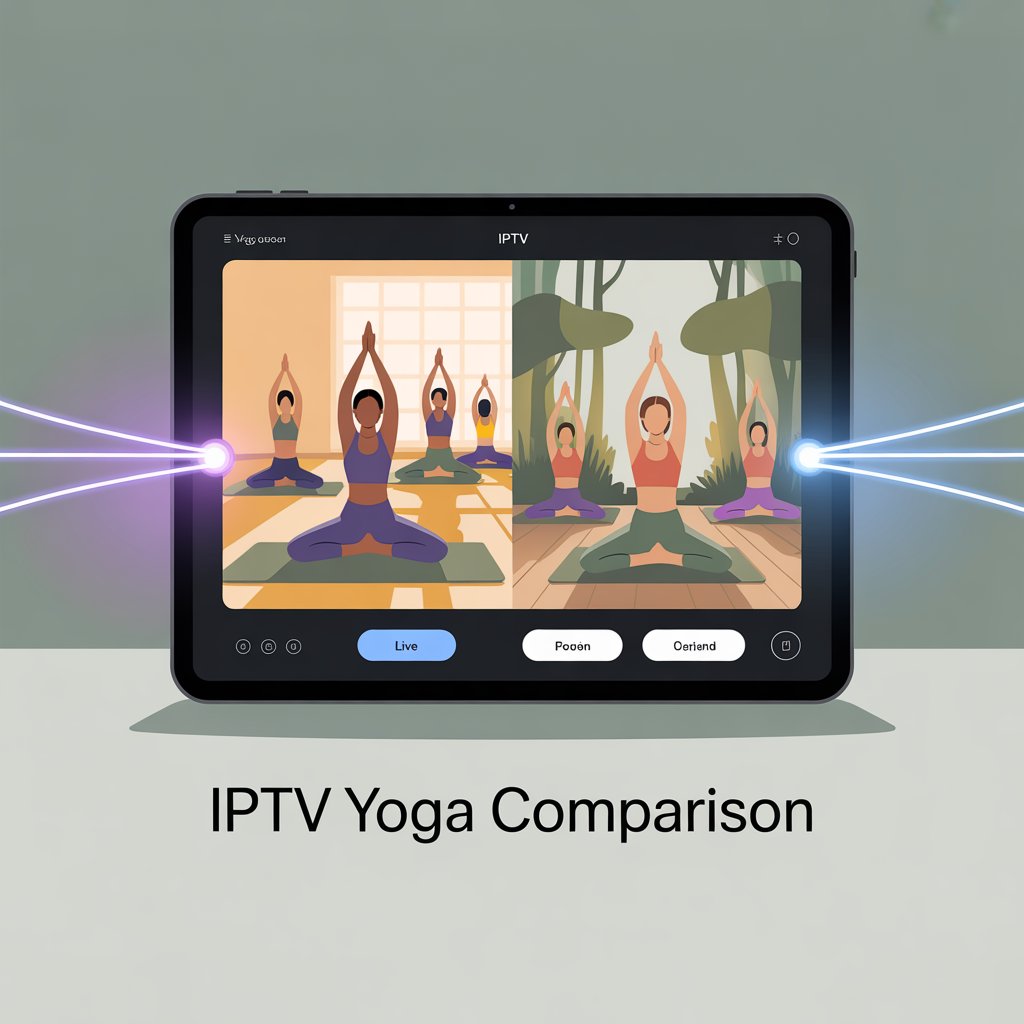
The two most common options for home-based yoga are watching classes through an IPTV service or joining a dedicated online yoga platform. While both deliver yoga to your screen, they are fundamentally different experiences that cater to different needs, goals, and lifestyles. Understanding these distinctions is the key to choosing the right tool for your wellness journey. This ultimate **iptv yoga classes comparison** will help you decide.
By the end of this guide, you’ll have a clear understanding of the benefits and drawbacks of each, empowering you to make the best decision for your practice. Let’s dive into this comprehensive **iptv yoga classes comparison**.
The Basics: What Are We Comparing?
Before we get into the nitty-gritty of our **iptv yoga classes comparison**, let’s define our two contenders. While they both use the internet to deliver video, their underlying technology and purpose are quite distinct.
What is IPTV?
IPTV, or Internet Protocol Television, is a system that delivers television content over your internet connection instead of a traditional broadcast, cable, or satellite service. You’ll find IPTV channels bundled with services from major internet providers like AT&T, Verizon, and CenturyLink. It’s essentially a modern form of television broadcasting.
For the purposes of yoga, an IPTV channel would be a specific, pre-scheduled broadcast of a yoga class. Think of it like a dedicated fitness channel on cable TV, but it’s delivered via your internet. This model is all about passive consumption—you watch what’s on, when it’s on. This is a crucial point in our **iptv yoga classes comparison**.
The content on these channels is curated and controlled by the service provider. You don’t get to choose from a library of thousands of classes, but you do get the simplicity of a TV schedule. These classes are typically professionally produced, but they lack the dynamic, real-time feel of a live stream. This makes them a more “lean-back” form of digital wellness. For more details on the technology behind this **iptv yoga classes comparison**, you can read our guide on Optimizing Your Smart Home Network for Streaming.
What Are Dedicated Online Yoga Platforms?
Online yoga platforms (like YogaGlo, Alo Moves, or even a local studio’s streaming service) are dedicated, on-demand or live streaming services specifically created for yoga and fitness. They are built from the ground up to offer a comprehensive and interactive experience. You access a massive library of classes, often categorized by style (Vinyasa, Hatha, Restorative), length, teacher, and skill level.
In our **iptv yoga classes comparison**, these platforms stand out because they offer a much more active and personalized experience. The content isn’t a simple broadcast; it’s a dynamic, two-way connection. This is a major factor in any thorough **iptv yoga classes comparison**.
Many of these platforms offer a mix of pre-recorded, on-demand classes and live-streamed sessions. The live-streamed classes can create a sense of community, with some platforms allowing for real-time chat or even video feedback from instructors. This is the main appeal for many yogis, as it brings a touch of the studio experience into the home. For more information on the different technologies that power at-home fitness, check out our article on the Benefits of At-Home Fitness Technology.
Core Differences: The iptv yoga classes comparison Breakdown
Now let’s get into the heart of the matter with a direct **iptv yoga classes comparison** across several key areas. Understanding these distinctions will help you decide which option aligns with your lifestyle and practice goals.
Content Delivery Model: Broadcast vs. On-Demand
This is the most significant difference. With IPTV, you are at the mercy of a schedule. A class airs at a specific time, and if you miss it, you have to wait for the next broadcast. This can be restrictive, especially if your schedule is unpredictable. It’s a passive, one-way system. With online platforms, you have complete control.
You can choose a class at 6 a.m. before work or at 10 p.m. before bed. The vast, on-demand library means you can practice whenever the mood strikes. This flexibility is a game-changer for people with busy lives and a key point in our **iptv yoga classes comparison**.
Interactivity and Community
If you crave connection, this part of the **iptv yoga classes comparison** is critical. An IPTV yoga class is non-interactive. There’s no teacher to ask for form corrections, no community chat, and no real-time engagement. It’s a solitary viewing experience.
Dedicated online platforms, however, often go to great lengths to build a community. Live classes allow you to interact with the instructor and other participants. Many services also have private forums or social features where you can connect with fellow yogis, share your progress, and get support. This sense of belonging can be a powerful motivator in any **iptv yoga classes comparison**.
For some, this lack of interaction is a deal-breaker. A study on the Journal of Medical Internet Research found that social support and community engagement are crucial for adherence to online exercise programs. If you’re a beginner, having a teacher correct your posture can prevent injury. If you’re advanced, having a way to ask questions about a complex pose is invaluable. The lack of this in an **iptv yoga classes comparison** puts IPTV at a disadvantage for serious practitioners.
User Experience and Customization
The user experience is worlds apart. An IPTV yoga class feels like watching a TV show. You tune in, and that’s it. You can’t fast-forward to a section you want to practice or rewind to get a better look at a pose. You can’t filter by your specific needs.
Online platforms, on the other hand, are built for personalization. You can search for classes based on:
- Skill Level: Beginner, Intermediate, Advanced
- Duration: 10 minutes, 30 minutes, 60+ minutes
- Style: Hatha, Vinyasa, Yin, Restorative, Power Yoga
- Focus: Core strength, flexibility, stress relief, back pain
- Teacher: If you have a favorite instructor
This level of control is impossible with IPTV. With a dedicated platform, you can create a yoga journey that is uniquely yours, which is a major victory for these services in a head-to-head **iptv yoga classes comparison**.
Cost and Subscription Models
From a financial standpoint, the **iptv yoga classes comparison** reveals different structures. IPTV yoga channels are typically part of a larger TV package. You might be paying for 500 channels when you only want one, leading to wasted money. You can’t just subscribe to the yoga channel alone. This aspect is important in any **iptv yoga classes comparison**.
Online platforms, however, are subscription-based. You pay a monthly fee (usually between $10-$30) for unlimited access to a massive library. This is often more cost-effective and transparent, as you’re only paying for the service you actually use. In a direct **iptv yoga classes comparison**, this pay-for-what-you-use model is a clear advantage for dedicated platforms, especially since they typically offer free trials. This is a crucial factor in any **iptv yoga classes comparison**.
Technical Requirements and Accessibility
The final factor in our **iptv yoga classes comparison** is the technical side. IPTV often requires a set-top box or a specific app provided by your TV service, limiting the devices you can use. You’re generally confined to your television.
Online platforms are much more flexible. You can access them via a web browser on your computer, a mobile app on your smartphone or tablet, or a streaming device like a Roku or Apple TV. This means you can practice yoga anywhere—in your living room, on vacation, or even in the park. This is a crucial element in our **iptv yoga classes comparison**.
For more details on choosing the right device for your needs, be sure to check out our guide on Choosing the Best Streaming Device for Your Home. Additionally, platforms typically offer a wider range of resolutions and an adjustable video quality to account for lower internet speeds. According to the FCC, average home internet speeds in the US are more than sufficient for most streaming needs, but dedicated platforms offer better adaptability to connectivity issues. For a full **iptv yoga classes comparison**, technical requirements are a must-consider.
Pros and Cons of Each Approach
To help simplify your choice, here is a quick summary of the pros and cons in our **iptv yoga classes comparison**.
Advantages of IPTV for Yoga
- Simplicity: It’s easy to use, just like flipping a channel. No complex logins or app navigation.
- Familiarity: The experience is similar to watching regular TV, which can be comfortable for some users. This is an important part of our **iptv yoga classes comparison**.
- Scheduled Content: The fixed schedule can be a helpful commitment device for people who struggle with motivation.
- Broad Access: If you already have an IPTV subscription, the classes are simply an added bonus at no extra cost.
Disadvantages of IPTV for Yoga
- Lack of Customization: No control over class length, style, or instructor. This is a significant drawback in any **iptv yoga classes comparison**.
- Zero Interactivity: You can’t ask questions or get real-time feedback.
- Inconvenient Scheduling: You must practice when the show airs, which can be very limiting.
- No Community: A solitary practice with no way to connect with others.
Advantages of Dedicated Online Platforms
- Ultimate Flexibility: Practice anywhere, anytime, on any device.
- Massive Variety: Access to thousands of classes, styles, and teachers. Our **iptv yoga classes comparison** shows this is a huge win.
- Personalization: Easily filter and search for classes that perfectly match your needs.
- Community & Interactivity: Join live classes, chat with instructors, and connect with other yogis. This is a crucial element of our **iptv yoga classes comparison**.
- Targeted Cost: You only pay for a service dedicated to what you want to do.
Disadvantages of Dedicated Online Platforms
- Requires Proactivity: You have to choose your class, which can sometimes lead to choice paralysis. This is a minor point in our overall **iptv yoga classes comparison**.
- Subscription Cost: It’s an additional monthly expense outside of your regular TV/internet bill.
- Potential for Distraction: The app-based experience might be less streamlined than just turning on a TV channel.
Frequently Asked Questions
Is IPTV suitable for all types of yoga?
IPTV is best for pre-recorded, follow-along classes that don’t require real-time feedback. It is not suitable for complex styles or workshops where interaction is needed. The **iptv yoga classes comparison** reveals it lacks the versatility of dedicated platforms.
Can I interact with the instructor on an IPTV yoga class?
No, IPTV is a one-way broadcast. There is no way to communicate with the instructor or other students. This is a key difference in a **iptv yoga classes comparison** with a dedicated online platform.
What’s the main difference in video quality?
Both can offer high-quality video. However, dedicated platforms often have more consistent, professionally produced content optimized for various devices, while IPTV quality can sometimes be dependent on your TV provider’s broadcast. When doing an **iptv yoga classes comparison**, it’s important to look at the stability of the stream.
Is it cheaper to use IPTV for yoga?
This depends on your current subscriptions. If you already pay for a large IPTV package, the yoga classes might feel “free.” However, if you only want the yoga classes, a dedicated online platform is almost always a more cost-effective choice. This is a common question in an **iptv yoga classes comparison**.
The Verdict: Which Path Is Right for You?
After a thorough **iptv yoga classes comparison**, it’s clear that neither option is inherently superior; the best choice depends entirely on you. If you are a beginner who wants a simple, no-fuss way to try out yoga and you already have an IPTV subscription, using a TV channel is a great, low-commitment starting point. The fixed schedule can also be a good way to build a routine. This is a common outcome of a good **iptv yoga classes comparison**.
However, if you are serious about your practice, want to grow, need variety, or thrive on community, a dedicated online yoga platform is the far better investment. The personalization, flexibility, and interactivity offered by these services are invaluable for a long-term yoga journey. They provide a more authentic and comprehensive at-home experience that can grow with you. Ultimately, your personal goals should be the final factor in your **iptv yoga classes comparison**. Whichever path you choose, the most important thing is to get on your mat and start flowing.
Which option sounds better for your practice, or have you found a way to use both? Share your experiences and insights in the comments below!
Return to top of page