

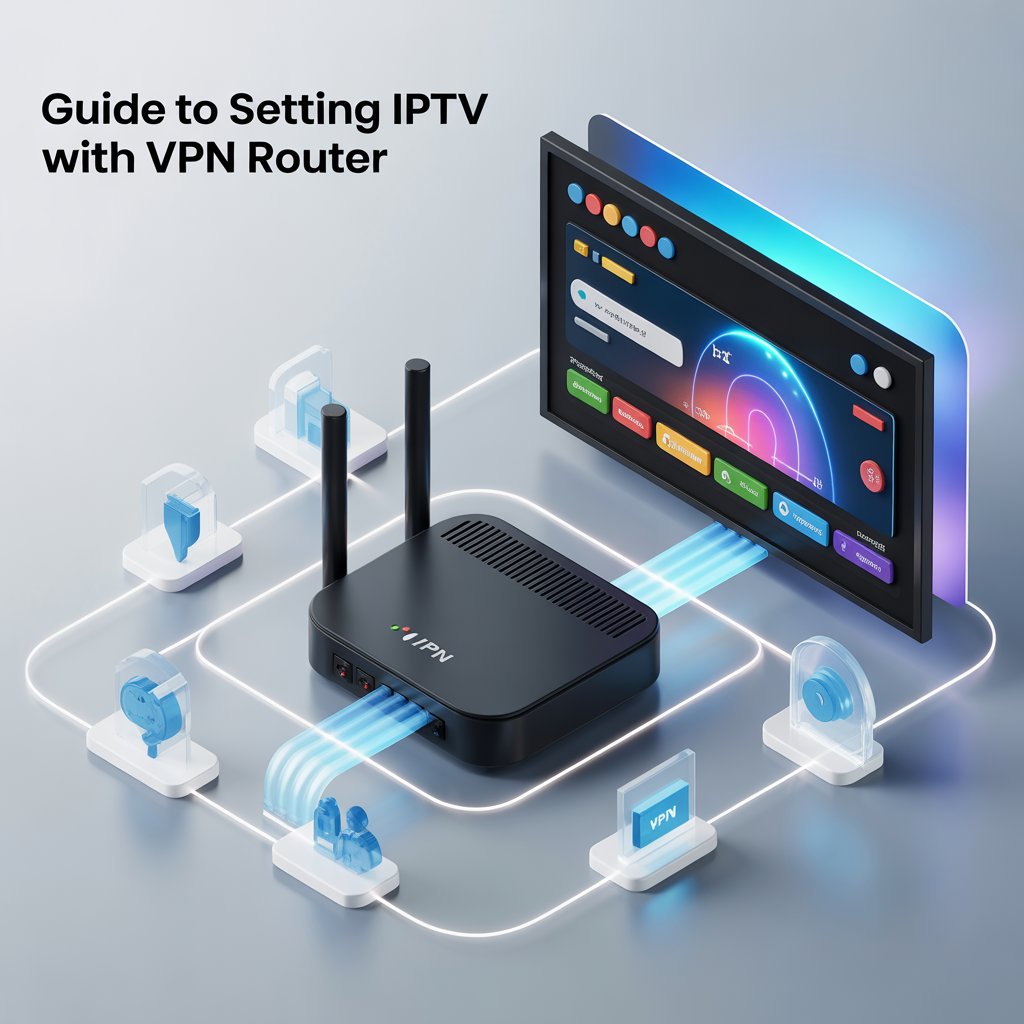
Mastering Your IPTV with a VPN: The Ultimate **IPTV VPN Router Setup** Guide
Are you tired of buffering, content restrictions, or privacy concerns while watching your favorite IPTV channels? If you’re a cord-cutter, you know these issues are all too common. While using a VPN on a single device helps, it’s not a complete solution. A better, more comprehensive approach is a full **IPTV VPN router setup**.
This method protects every single device on your network—your Smart TV, Firestick, gaming console, and smartphone—all at once. This guide will walk you through the why and how of an **IPTV VPN router setup**, giving you a powerful, secure, and restriction-free viewing experience. We’ll cover everything from choosing the right router to a step-by-step configuration process. Get ready to take back control of your streaming and learn how an **IPTV VPN router setup** can change your life.
You’ve probably been there before. You’ve just paid for a new IPTV subscription, excited to binge-watch your favorite show, only to be met with a frustrating “Content Not Available in Your Region” message. Or maybe your stream is constantly buffering just as the big game is about to start, all because your internet service provider (ISP) is throttling your connection. These are the all-too-common frustrations that can ruin your streaming experience. A good **IPTV VPN router setup** can solve these issues for good.
Why Set Up a VPN on Your Router for IPTV?
You might be wondering why you should even bother with an **IPTV VPN router setup** when you can just install a VPN app on your individual devices. The answer is simple: convenience and coverage. A router-level VPN provides a blanket of protection for every device connected to your Wi-Fi, without the need to install or run a separate app on each one.
This is especially important for devices that don’t support VPN apps, like some Smart TVs, gaming consoles, or certain streaming devices. An **IPTV VPN router setup** ensures every device on your network is secure.
Beyond convenience, an **IPTV VPN router setup** offers a few key advantages, creating a more comprehensive solution than single-device VPNs. It provides total network protection, meaning every single device on your home network is automatically protected from the moment it connects to the Wi-Fi. This eliminates the hassle of having to remember to turn on the VPN on each device, which can be a real pain.
A router VPN also gives you access to geo-restricted content by allowing you to connect to a VPN server in another country. This effectively “teleports” your entire home network to that location. It is a massive benefit for IPTV users who want to unlock channels, sports events, and on-demand content that are normally restricted in their region. This comprehensive protection is a game-changer for anyone serious about their streaming. A proper **IPTV VPN router setup** gives you back control and freedom over your content.
Choosing the Right Router for IPTV VPN Setup
Not every router is up to the task. To get started with an **IPTV VPN router setup**, you need a router that is compatible with VPN client software. Most standard routers from your ISP won’t work out of the box. You’ll need a router that is either pre-flashed with a custom firmware or one that supports VPN client functionality natively. The most common firmwares are:
- DD-WRT: A free, open-source firmware that offers powerful customization and supports VPN clients. It’s often used for older routers that can be repurposed.
- Tomato: Another open-source firmware known for its user-friendly interface and robust feature set. It’s a favorite for its graphical bandwidth monitoring.
- OpenWRT: A highly flexible, community-supported firmware. It provides a huge amount of control and is often used by advanced users.
When shopping for a router, look for models that explicitly state they are “VPN client-compatible” or “VPN-ready.” High-end models from brands like Netgear, Asus, and Linksys often have this functionality built-in. A good model to start with might be an Asus RT-AC68U or a Netgear Nighthawk. These routers are known for their strong performance and native VPN support.
This is a critical first step to a successful **IPTV VPN router setup**. Once you have a suitable router, you can begin to plan your **IPTV VPN router setup**.
Prerequisites: What You Need to Get Started
Before you begin the **IPTV VPN router setup** process, make sure you have the following:
- A VPN Service Subscription: You need a premium VPN provider that allows router setup. We recommend a provider that is known for its speed and reliability, as this is crucial for streaming. Free VPNs often have bandwidth limits, slow speeds, and limited server locations that are not suitable for streaming high-quality IPTV.
- Your Router’s IP Address and Login Credentials: You’ll need this to access your router’s administration page. You can usually find this information on the router itself or in its manual. A common default IP address is 192.168.1.1 or 192.168.0.1.
- VPN Configuration Files: Your VPN provider will give you these files, typically in an OpenVPN format (.ovpn). These contain all the server information you need for your **IPTV VPN router setup**, including the server address, port, and security keys.
- An Ethernet Cable: For a stable connection during the setup process. It’s always best to use a wired connection to avoid any Wi-Fi drops during the crucial configuration steps.
Having all of these items ready before you start will make your **IPTV VPN router setup** much smoother. This preparation is key to avoiding common errors and getting the service up and running quickly. It is also important to note that you should have a good IPTV provider ready to go as well. You can get a good idea of what to look for by reading our guide on How to Preview IPTV Channels.
Step-by-Step **IPTV VPN Router Setup**
This is a general guide, as the exact steps may vary depending on your router and VPN provider. Always refer to your provider’s specific instructions for your model.
- Access Your Router’s Admin Page: Open a web browser on your computer and type in your router’s IP address (e.g., 192.168.1.1 or 192.168.0.1). Log in with your credentials. This is the central hub for all your router’s settings.
- Locate the VPN Client Section: In the router’s settings, look for a “VPN Client,” “OpenVPN,” or “VPN” section. The name might vary, so check your router’s manual. This is where you’ll configure the connection.
- Upload Your VPN Configuration Files: Your VPN provider will give you a configuration file. Upload or paste the contents of this file into the appropriate field. This file contains the server address, port, and other connection details needed for your **IPTV VPN router setup**.
- Enter Your VPN Credentials: You’ll be asked for your VPN username and password. Enter them and save the settings. Make sure there are no typos, as this is a common source of errors.
- Connect to the VPN Server: Once everything is configured, you’ll see an option to connect. Click “Connect,” and wait for the status to show “Connected.” Your **IPTV VPN router setup** is now complete!
After completing these steps, you’ve successfully configured your router to automatically connect to your VPN. All devices connected to your network will now have their traffic routed through the VPN, giving you a secure and unrestricted IPTV experience. You can confirm your VPN is working by checking your IP address on a site like WhatIsMyIP. The IP address shown should match the location of the VPN server you connected to, not your actual home location.
If you’re still having issues, you may want to test your M3U playlist. Our guide on The Ultimate Guide to Using an IPTV M3U Playlist Editor can help you with that. A faulty playlist can also cause streaming issues. It is important to rule out this problem when your **IPTV VPN router setup** is complete and you’re still having issues.
Common Issues and Troubleshooting
Even with a perfect guide, issues can arise. Here are some common problems you might encounter with your **IPTV VPN router setup** and how to fix them:
- Slow Speeds: This is often due to a distant or congested VPN server. Try switching to a different server. A wired Ethernet connection to your router can also help improve speeds. If your router has a “Quality of Service” (QoS) setting, you can prioritize streaming traffic.
- Connection Drops: Your router might not have enough processing power to handle the encryption. In this case, you may need to upgrade to a more powerful router. You can also try a different VPN protocol if your router supports it.
- DNS Leaks: This happens when your DNS requests are not routed through the VPN, exposing your activity. You can check for a DNS leak on sites like DNSLeakTest. Most VPN providers offer a way to prevent this in their settings.
- Cannot Connect: Double-check that you entered your VPN credentials correctly and that your router supports the VPN protocol your provider uses. Sometimes, a simple reboot of your router and devices can solve the issue.
It’s important to remember that the quality of your streaming experience is a combination of your **IPTV VPN router setup**, your IPTV service, and your devices. If you’re still having issues with your streaming apps, our guide on The Top IPTV Player Apps and Devices for 2025 can help.
Q&A: Answering Your Top Questions
Will an **IPTV VPN router setup** slow down my internet?
Yes, all VPNs add some level of overhead, which can slightly reduce your internet speed. However, a high-quality VPN and a powerful router can minimize this effect. The benefits of security and unblocking content often outweigh the minor speed reduction. Plus, a router VPN can prevent ISP throttling, which might actually make your streaming faster.
Can I still use a VPN on my other devices after the router setup?
Yes. The router setup provides a blanket of protection. You can still use the VPN app on your other devices if you want to connect to a different server location or get additional security features that are not available through the router. The router will provide a fallback for all devices in your home network.
How do I know if my router supports a VPN?
The easiest way is to check the manufacturer’s website or the router’s manual. Look for terms like “VPN client,” “OpenVPN,” or “PPTP/L2TP support.” If your router doesn’t have this functionality, you might be able to flash it with a custom firmware like DD-WRT. However, be cautious as this can void your warranty and potentially “brick” your router if not done correctly.
What is the difference between a VPN-enabled router and a VPN router?
A VPN-enabled router has the ability to act as a VPN client or server out of the box. A VPN router, however, is a standard router that has been flashed with a custom firmware to enable VPN client functionality. The term is often used interchangeably, so it’s important to confirm the specific capabilities of the router you are purchasing. For a truly secure **IPTV VPN router setup**, you will need one that has VPN capabilities.
Can I use my ISP-provided router for this setup?
It’s highly unlikely. Most ISP-provided routers are locked down and do not support the VPN client functionality required for this kind of setup. You will need to purchase your own router that is compatible with VPN client software. This is a crucial step to a successful **IPTV VPN router setup**.
Does a router VPN protect my privacy from my IPTV provider?
No, a router VPN will not hide your IP address from your IPTV provider. When you connect to your IPTV service, your traffic is first sent to your VPN server and then to the IPTV provider’s server. Your IPTV provider will see the IP address of the VPN server, but not your personal IP address. The VPN’s primary function in this context is to bypass geo-restrictions and prevent ISP throttling, not to hide your identity from the provider you are paying. To protect your privacy from the provider, you would need to use a different method. This is a common misconception about an **IPTV VPN router setup**.
Is an **IPTV VPN router setup** hard for a beginner?
It can be. While this guide breaks down the steps, a router VPN setup is more complex than simply installing an app. It requires some technical knowledge, patience, and the right hardware. However, with the right guide and a little effort, it is definitely a manageable project. Many VPN providers have excellent customer support to help with this process. If you’re a beginner, it’s best to take your time and follow the instructions carefully.
Conclusion
An **IPTV VPN router setup** is one of the best ways to enhance your streaming experience. It offers a level of security, privacy, and freedom that a simple app on a single device cannot match. By following the steps in this guide, you can unlock a world of content, prevent buffering, and ensure that all your devices are protected with a single, powerful solution. This is not just a technical upgrade; it’s a step toward a more seamless, secure, and enjoyable streaming life. Take the plunge and transform your home network today.
We hope this guide has given you all the information you need to get started with a router VPN. The benefits, from network-wide security to consistent streaming speeds, make the effort more than worthwhile. Once you have your **IPTV VPN router setup** in place, you’ll never have to worry about buffering again. Say goodbye to the frustrations of geo-restrictions and ISP throttling, and say hello to the freedom of a truly open internet. The peace of mind you get from knowing your entire home network is protected is invaluable.
Do you have a question about setting up your VPN router? Share your thoughts and experiences in the comments below!
Return to top of page