

Beyond the Screen: An In-depth IPTV Virtual Reality Comparison for Immersive Entertainment in 2025
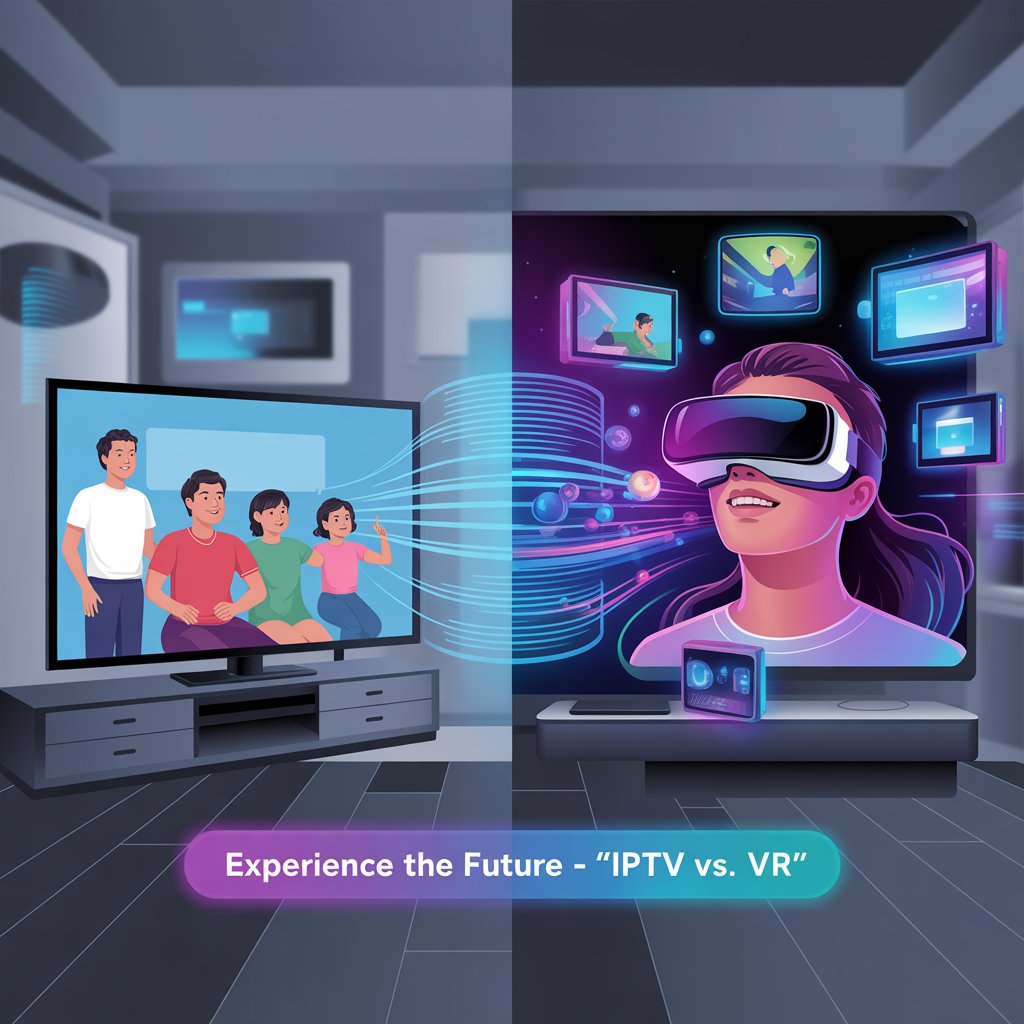
The landscape of home entertainment is undergoing a profound transformation. For years, Internet Protocol Television (IPTV) has redefined how we access linear and on-demand content, offering unparalleled flexibility compared to traditional cable. But what happens when you combine the vast content libraries of IPTV with the groundbreaking immersion of Virtual Reality (VR)? The result is a truly revolutionary viewing experience, and understanding the nuances of an IPTV virtual reality comparison is becoming essential for tech enthusiasts in the United States.
In 2025, VR headsets are more accessible and powerful than ever, moving beyond niche gaming devices to become platforms for diverse experiences, including media consumption. The potential for IPTV to deliver content within these immersive environments is immense, promising to transport viewers directly into their favorite shows, live events, or even virtual social viewing spaces. This convergence marks a significant leap from passive viewing to active participation.
This comprehensive guide will provide an in-depth IPTV virtual reality comparison, exploring how these two technologies intersect, the unique benefits and challenges of their integration, and what you can expect from immersive IPTV experiences in the coming years. We’ll delve into content delivery, user experience, hardware considerations, and the exciting future of this synergy. Get ready to step into the future of television with our ultimate IPTV virtual reality comparison!
Table of Contents
- What is IPTV? A Quick Recap
- What is Virtual Reality? Beyond Gaming
- Why the Convergence? The Promise of Immersive IPTV
- Content Delivery & Quality: An IPTV Virtual Reality Comparison
- User Experience & Immersion: The Core of IPTV VR
- Hardware & Compatibility: What You Need for IPTV VR
- Monetization Models: How IPTV VR Content is Priced
- Accessibility & Comfort: Bridging the Gap
- Current State of IPTV VR in 2025
- Challenges and Solutions in IPTV VR Integration
- The Future Outlook: What’s Next for IPTV Virtual Reality?
- Conclusion: The Immersive Revolution is Here
What is IPTV? A Quick Recap
Before diving into the IPTV virtual reality comparison, let’s briefly revisit IPTV. As detailed in our guide What is IPTV?, it delivers television content over Internet Protocol networks. This means instead of traditional broadcast or cable signals, video streams are sent over your internet connection. This technology allows for greater flexibility, including on-demand content, interactive features, and personalized viewing experiences. IPTV has already transformed how millions in the USA consume media, offering vast libraries and live channels through a single internet connection. Its adaptability makes it a prime candidate for integration with emerging technologies like VR.
What is Virtual Reality? Beyond Gaming
Virtual Reality (VR) is a simulated experience that can be similar to or completely different from the real world. Modern VR systems use VR headsets or multi-projected environments to generate realistic images, sounds, and other sensations that simulate a user’s physical presence in a virtual or imaginary environment. While often associated with gaming, VR’s applications are rapidly expanding into education, training, social interaction, and, crucially, entertainment. The ability to create a sense of “presence” is what sets VR apart, and it’s this immersive quality that drives the interest in an IPTV virtual reality comparison.
For a deeper understanding of VR technology, you can explore resources like Road to VR’s comprehensive explanation.
Why the Convergence? The Promise of Immersive IPTV
The natural synergy between IPTV and VR lies in their shared goal: delivering compelling content. However, VR takes this to an unprecedented level. Here’s why an IPTV virtual reality comparison highlights a powerful convergence:
- Unparalleled Immersion: Imagine watching a live concert from the front row, a sports game from the sidelines, or a documentary from within the historical setting. VR can transport you, making passive viewing an active, sensory experience.
- Personalized Virtual Environments: IPTV platforms could offer customizable virtual living rooms, theaters, or unique fantasy settings where you can watch content. This moves beyond simply choosing a show to choosing your entire viewing ambiance.
- Social Viewing Experiences: VR enables shared virtual spaces where you can watch IPTV content with friends and family, even if they are thousands of miles away. This brings a new dimension to shared entertainment, a concept gaining traction in the metaverse entertainment trends.
- Interactive Content: Future IPTV content could be designed specifically for VR, allowing viewers to interact with elements within the show, choose camera angles, or access supplementary information in real-time.
- New Monetization Avenues: Beyond traditional subscriptions, VR opens doors for virtual item sales, premium virtual seats at events, or exclusive VR-enhanced content tiers, as explored in our article on IPTV Crypto Rewards 2025.
This convergence promises to redefine the very definition of “watching TV,” making an IPTV virtual reality comparison a crucial topic for 2025 and beyond.
Content Delivery & Quality: An IPTV Virtual Reality Comparison
Delivering high-quality VR content via IPTV presents unique challenges and opportunities compared to standard 2D streaming. This is a critical aspect of any IPTV virtual reality comparison.
1. Bandwidth Requirements
VR content, especially 360-degree video or volumetric video, demands significantly more bandwidth than traditional HD or even 4K video. A seamless VR experience requires ultra-low latency and high bitrates to prevent motion sickness and ensure visual fidelity. Providers offering IPTV VR will need robust network infrastructure. For insights on network optimization, see our guide on Optimizing Your Home Network for Streaming.
2. Latency and Buffering
In VR, even slight delays (latency) or buffering can cause discomfort and break immersion. IPTV systems built for VR must minimize latency from content source to headset. This often involves edge computing and optimized streaming protocols. Learn about the importance of low-latency streaming technologies.
3. Video Formats for VR
IPTV VR will support various formats beyond standard flat video, including:
- 360-degree Video: Allows viewers to look around a spherical video.
- Stereoscopic 3D: Provides depth perception, making the scene feel more real.
- Volumetric Video: Captures objects and environments as 3D data, allowing viewers to move around within the scene, offering the highest level of immersion.
- Adaptive Bitrate Streaming (ABR): Essential for VR, allowing the stream quality to adjust based on network conditions to maintain a smooth experience. This is a core component of adaptive bitrate streaming explained.
The quality of content delivery is paramount for a compelling IPTV virtual reality comparison.
User Experience & Immersion: The Core of IPTV VR
The user experience in IPTV VR is fundamentally different from traditional IPTV. This section of our IPTV virtual reality comparison focuses on how immersion is achieved and interacted with.
1. Navigation in VR Environments
Instead of a flat menu on a TV screen, users will navigate content within a 3D virtual space. This could involve virtual remote controls, hand tracking, or gaze-based selection. Intuitive VR UI/UX design is critical for adoption. Explore trends in VR UI/UX design principles.
2. Interactivity and Control
Beyond simple play/pause, IPTV VR can offer interactive elements. Imagine selecting different camera angles at a live sports event by simply looking at a virtual icon, or pulling up player stats within your virtual stadium seat. This level of interaction is a game-changer. This is a key differentiator in an IPTV virtual reality comparison.
3. Social Presence
The ability to watch content with avatars of friends and family in a shared virtual space adds a powerful social dimension. You can chat, react, and even interact with virtual objects together, making it a truly communal experience. This is a significant evolution from basic multi-user streaming setups.
4. Audio Immersion
Spatial audio is crucial for VR immersion. IPTV VR will leverage advanced audio technologies to make sounds appear to come from specific directions within the virtual environment, enhancing realism. This complements our insights on optimizing home audio for streaming.
The depth of immersion and quality of interaction are key metrics in any IPTV virtual reality comparison.
Hardware & Compatibility: What You Need for IPTV VR
The hardware required for IPTV VR is more specialized than a typical IPTV box. This section of our IPTV virtual reality comparison highlights the necessary equipment.
1. VR Headsets
You’ll need a compatible VR headset. These typically fall into two categories:
- Standalone VR Headsets: (e.g., Meta Quest series, Pico Neo) These are all-in-one devices that don’t require a PC or external sensors. They are convenient and increasingly powerful, making them ideal for casual IPTV VR consumption.
- PC VR Headsets: (e.g., Valve Index, HTC Vive Pro) These require a powerful gaming PC and external tracking. They offer the highest fidelity and widest range of experiences but are less portable.
The choice of headset significantly impacts the quality and accessibility of your IPTV VR experience. For a comprehensive guide, see The Verge’s Best VR Headsets guide.
2. Internet Connection
As mentioned, a high-speed, stable internet connection is non-negotiable. Fiber optic internet is highly recommended for the best experience. Our article on Internet Speed Requirements for Streaming provides more details.
3. IPTV Provider Compatibility
Not all IPTV providers will support VR. You’ll need a provider that offers a dedicated VR app or a web-based VR experience compatible with your headset’s browser. Look for providers actively investing in VR content delivery, often highlighted in their IPTV Virtual Reality Plans.
4. Processing Power
Even standalone headsets require significant processing power to render immersive environments and high-resolution video. Ensure your chosen headset or PC meets the recommended specifications for VR streaming.
Hardware readiness is a crucial component of any practical IPTV virtual reality comparison.
Monetization Models: How IPTV VR Content is Priced
The integration of VR opens up new monetization strategies for IPTV content, moving beyond traditional subscription models. This is an evolving area within the IPTV virtual reality comparison.
1. Subscription Tiers with VR Access
The most common model will likely be premium subscription tiers that include access to VR content libraries or VR-enhanced live events. This could be an add-on to existing IPTV plans.
2. Pay-Per-View (PPV) VR Events
Live VR concerts, sports events, or exclusive premieres could be offered on a pay-per-view basis, leveraging the unique immersive qualities of VR to command a premium price. This is particularly appealing for high-demand events.
3. In-App Purchases and Virtual Goods
Within virtual IPTV environments, users might be able to purchase virtual items, such as customizable avatars, virtual “seats” with better views, or digital collectibles related to shows. This ties into the broader metaverse economics.
4. Advertising in VR
While still nascent, advertising within VR environments could take new forms, from subtle product placements in virtual spaces to interactive ad experiences. This offers new revenue streams for providers.
5. Tokenized Rewards and NFTs
As discussed in IPTV Crypto Rewards 2025, blockchain-based tokens and NFTs could play a significant role, allowing users to earn rewards for engagement or own unique digital assets related to content. This model offers a truly groundbreaking approach to content monetization within the IPTV virtual reality comparison.
Accessibility & Comfort: Bridging the Gap
For IPTV VR to achieve widespread adoption, accessibility and user comfort are paramount. This is a vital consideration in any comprehensive IPTV virtual reality comparison.
1. Reducing Motion Sickness
Motion sickness (cybersickness) is a common issue for some VR users. IPTV VR content creators and platforms must prioritize smooth motion, stable visuals, and comfortable frame rates to minimize this. Techniques like fixed reference points and careful camera work are essential. Learn about reducing VR motion sickness.
2. Ease of Use
VR interfaces need to be intuitive, especially for users new to VR. Simple navigation, clear controls, and minimal setup friction will be key to broader adoption. This aligns with principles of user-friendly tech design.
3. Physical Comfort of Headsets
Long viewing sessions require comfortable, lightweight headsets with good weight distribution and ventilation. As headset technology advances, comfort will continue to improve. Consider our review of best VR headsets for media consumption.
4. Inclusive Design
Ensuring IPTV VR experiences are accessible to users with disabilities (e.g., closed captions in VR, adjustable text sizes, voice commands) will be crucial for inclusive growth. This aligns with broader accessibility in tech initiatives.
Addressing these factors will significantly influence the success of IPTV VR in the market, making them crucial for an effective IPTV virtual reality comparison.
Current State of IPTV VR in 2025
As of 2025, IPTV VR is still in its nascent stages but is rapidly gaining traction. Dedicated VR streaming platforms exist, offering a mix of 360-degree videos, immersive documentaries, and virtual concert experiences. Some major IPTV providers are experimenting with VR apps that allow users to watch their standard 2D content on a giant virtual screen within a headset, essentially creating a private cinema experience. This is a common entry point for an IPTV virtual reality comparison.
Live VR sports broadcasts are becoming more common, offering unique perspectives from the field or court. While widespread adoption is still a few years away, the foundational technologies and content partnerships are being built. Key players in both the IPTV and VR hardware sectors are investing heavily in this convergence, signaling a strong future. For the latest industry news, check out TechCrunch’s VR section.
Challenges and Solutions in IPTV VR Integration
Despite the exciting potential, integrating IPTV and VR comes with hurdles. A thorough IPTV virtual reality comparison must acknowledge these challenges and potential solutions.
1. Content Creation Costs and Availability
Challenge: Producing high-quality, truly immersive VR content is significantly more expensive and complex than traditional video. This limits the volume and variety of available content.
Solution: Investment from major studios and broadcasters, standardized production tools, and the growth of independent VR creators will help. User-generated VR content platforms could also emerge.
2. Hardware Cost and Accessibility
Challenge: While VR headsets are becoming more affordable, they are still a significant investment for many households, especially compared to a simple streaming stick.
Solution: Continued innovation will drive down hardware costs. Subscription models that bundle headsets with IPTV VR plans, or rental options, could increase accessibility. This is a key area for affordable VR tech.
3. User Experience Learning Curve
Challenge: VR can be disorienting for new users, and navigating complex interfaces within a headset can be challenging.
Solution: Intuitive UI/UX design, comprehensive tutorials, and simplified controls will be vital. Social VR experiences can also help new users adapt with guidance from friends. Our tips on onboarding new tech users apply here.
4. Network Infrastructure Limitations
Challenge: Delivering high-bandwidth, low-latency VR streams to every home in the USA requires significant upgrades to internet infrastructure.
Solution: Continued fiber optic rollout, advancements in 5G and future wireless technologies, and the adoption of decentralized content delivery networks (CDNs) will be crucial. This links to our discussion on the future of decentralized streaming.
Addressing these challenges effectively will be key to the widespread success of IPTV VR, influencing future IPTV virtual reality comparison metrics.
The Future Outlook: What’s Next for IPTV Virtual Reality?
The future of IPTV and VR integration is incredibly exciting. Our IPTV virtual reality comparison reveals a trajectory towards more seamless, interactive, and personalized entertainment experiences.
- Ubiquitous VR Viewing Spaces: Expect more sophisticated virtual environments, from personal cinema rooms with dynamic screen sizes to shared virtual stadiums for live events, complete with customizable avatars and real-time interaction features.
- AI-Powered Content Curation: AI will play an even larger role, not just recommending content but also suggesting optimal virtual viewing environments or even generating personalized VR experiences based on your preferences.
- Mixed Reality (MR) Integration: The line between VR and Augmented Reality (AR) will blur. Future headsets will offer mixed reality capabilities, allowing you to watch IPTV content on virtual screens overlaid onto your real living room, or interact with virtual elements that blend with your physical surroundings. This is a significant step beyond current AR streaming applications.
- Direct Creator Monetization: Blockchain and NFT technologies will enable creators to directly monetize their immersive content, fostering a vibrant ecosystem of independent VR experiences within IPTV platforms. This builds on the concepts discussed in IPTV Crypto Rewards 2025.
- Hyper-Personalized Live Events: Imagine attending a virtual concert where you can choose your vantage point, interact with other fans, and even go “backstage” in a fully rendered 3D environment, all delivered via IPTV. This is the ultimate goal of immersive live streaming.
The vision is clear: IPTV will not just deliver content *to* you, but immerse you *within* it, creating truly unforgettable entertainment moments. This ongoing evolution will make every future IPTV virtual reality comparison more fascinating.
Conclusion: The Immersive Revolution is Here
The convergence of IPTV and Virtual Reality represents a groundbreaking leap in digital entertainment. Our IPTV virtual reality comparison highlights the immense potential for immersive content delivery, personalized viewing environments, and interactive social experiences that go far beyond traditional television.
While challenges in content creation, hardware accessibility, and network infrastructure remain, the rapid pace of innovation suggests that IPTV VR will become an increasingly significant part of how we consume media in the United States. As headsets become more comfortable and affordable, and content becomes richer and more diverse, the lines between watching and experiencing will continue to blur.
Embrace this exciting future. The immersive revolution is not just coming; it’s already here, reshaping your entertainment landscape.
What Are Your Thoughts on IPTV Virtual Reality?
Have you tried watching content in VR? What are your hopes or concerns for the future of IPTV and virtual reality integration?
Share your experiences and predictions in the comments below! Let’s discuss how this groundbreaking technology will change our viewing habits.
SEO-friendly URL slug suggestion: /iptv-virtual-reality-comparison-guide