
The Ultimate Guide to Using an **iptv for 5g router**: Stream Flawlessly Anywhere
Are you tired of buffering streams, pixelated pictures, and frustrating lag? For anyone who relies on IPTV (Internet Protocol Television), a smooth viewing experience is a top priority.
The quality of your IPTV service is tied directly to the speed and stability of your internet connection. But what if a wired connection isn’t an option?
The answer for many is to combine **iptv for 5g router** technology. This creates a powerful, portable, and lightning-fast solution.
This guide will show you how to set up an **iptv for 5g router**. We’ll cover the benefits and drawbacks, discuss how to choose the right hardware, and provide actionable tips for optimizing your streaming experience. By the end, you’ll understand why it’s a game-changer for cord-cutters and digital nomads alike.
Understanding the Synergy: Why IPTV and 5G are a Perfect Match
Before we dive into the details, let’s break down what we’re talking about. IPTV delivers television content over an internet connection, rather than a traditional satellite or cable box.
This offers incredible flexibility and access to a vast array of channels and on-demand content. However, it’s also highly dependent on your internet speed and stability.
A slow connection can lead to constant buffering and a terrible viewing experience. This is where the power of a 5G router comes in.
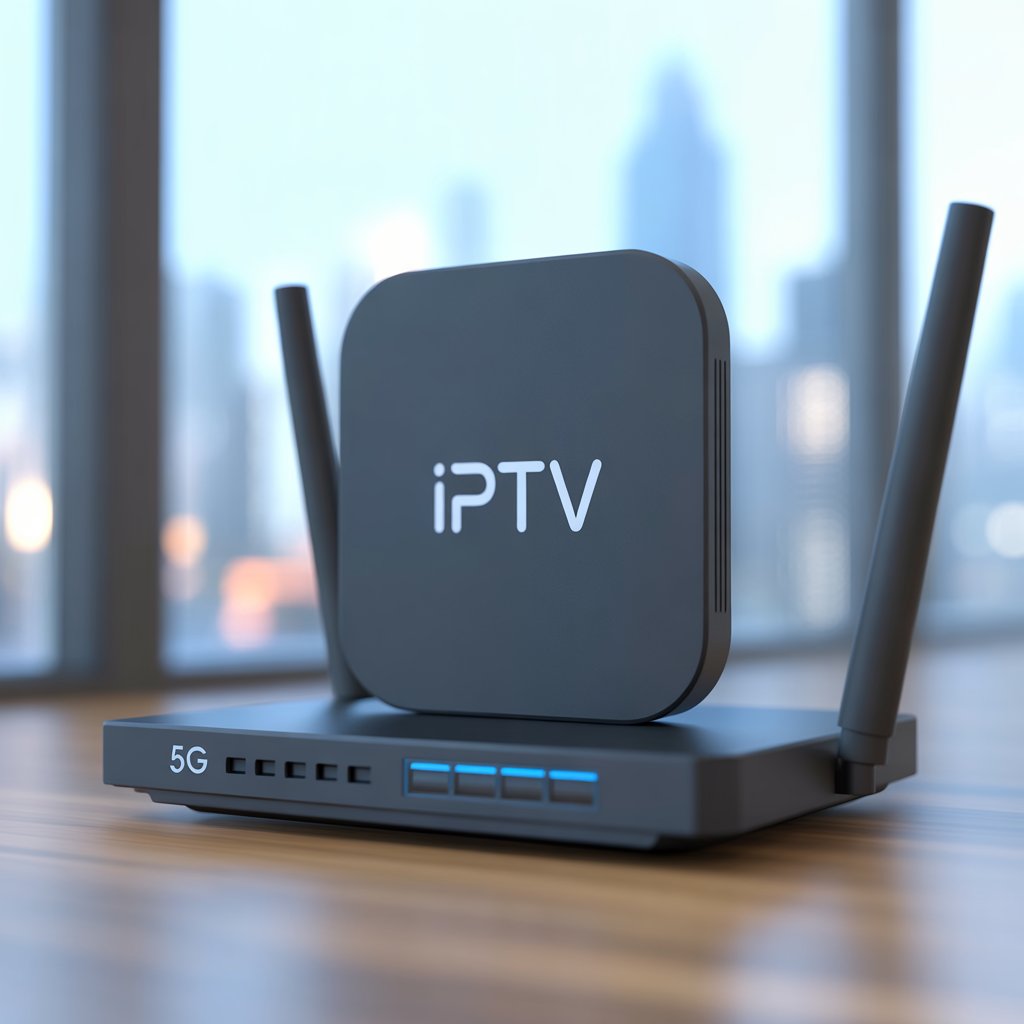
A 5G router is a device that connects to a cellular network and broadcasts a Wi-Fi signal in your home or on the go. Unlike a mobile hotspot, these devices are designed for continuous use and can often handle more simultaneous connections.
The “5G” part refers to the fifth generation of cellular technology. This offers three key advantages that are perfect for an **iptv for 5g router** solution: speed, low latency, and portability.
The Key Advantages of Using an **iptv for 5g router**
The benefits of pairing these two technologies are clear, and they address some of the biggest frustrations that streamers face.
Unmatched Speed and Bandwidth
5G networks are capable of delivering multi-gigabit speeds, rivaling and often surpassing traditional fiber-optic broadband. This massive jump in bandwidth is the single most important factor for an **iptv for 5g router** setup. A faster connection means:
- **No more buffering:** With speeds high enough to handle multiple 4K streams at once, buffering becomes a distant memory. Your IPTV content will load instantly and play flawlessly.
- **Higher quality streaming:** A robust connection allows you to stream in the highest quality available, whether that’s HD, Full HD, or even 4K, without a drop in performance.
- **Support for multiple users:** You can have multiple family members watching different shows on different devices without slowing each other down. This is the ultimate **iptv for 5g router** benefit.
Superior Portability and Flexibility
One of the most exciting aspects of an **iptv for 5g router** setup is its portability. Unlike a wired internet connection tied to a physical address, a 5G router can be used anywhere you have a cellular signal. This is perfect for a variety of lifestyles:
- **Digital Nomads:** Work and travel from anywhere while still enjoying your home entertainment.
- **RV and Van Life Enthusiasts:** Turn your vehicle into a rolling media hub.
- **Renters:** Avoid the hassle of dealing with cable companies or waiting for installation appointments. Just plug in your **iptv for 5g router** and you’re ready to stream.
- **Temporary Living:** Perfect for students in dorms, people on a work assignment, or anyone in short-term housing. Your **iptv for 5g router** setup goes wherever you do.
Low Latency for Live Content
Latency, or “ping,” is the time it takes for data to travel from its source to your device. High latency can cause a noticeable delay in live streams, which is a major problem for live sports, news, and events.
5G networks are engineered for extremely low latency, often measured in single-digit milliseconds. This makes an **iptv for 5g router** ideal for live TV, as you’ll see the action unfold in near real-time, with minimal lag.
This is a huge advantage over traditional cellular connections and even some wired broadband services. For live content, a good **iptv for 5g router** makes all the difference.
Easy and Quick Setup
Setting up a traditional wired internet connection can be a time-consuming process that often requires a technician visit. With a **iptv for 5g router**, the setup is incredibly simple.
You just insert a SIM card, plug in the router, and connect your devices. No drilling, no messy wires, and no waiting.
This ease of use is a key selling point for a high-quality **iptv for 5g router** solution. The convenience of a plug-and-play **iptv for 5g router** setup is hard to beat.
Potential Downsides and Challenges to Consider
While an **iptv for 5g router** offers many benefits, it’s not a perfect solution for everyone. It’s important to be aware of the potential drawbacks before you invest. The ideal **iptv for 5g router** setup requires a bit of planning to overcome these challenges.
Coverage and Signal Strength
The single biggest factor is network availability. While 5G is expanding rapidly, it’s not yet available everywhere, especially in rural areas.
Even in cities, signal strength can vary greatly depending on your location, with factors like building materials and distance from the cell tower playing a huge role. If your signal is weak, your **iptv for 5g router** will struggle to maintain a stable connection, leading to buffering and a poor experience.
Always check your carrier’s coverage map before committing to a specific **iptv for 5g router** and plan. Your success with an **iptv for 5g router** hinges on a strong signal.
Data Caps and Costs
Many cellular plans, including some “home internet” plans, come with data caps. Streaming IPTV in high definition can consume a significant amount of data, sometimes over 3GB per hour for a single 4K stream.
If your plan has a data cap, you could hit it very quickly, resulting in throttled speeds or expensive overage charges. Make sure to choose an unlimited data plan designed for home internet to ensure your **iptv for 5g router** can handle your usage.
The cost of a 5G router itself can also be higher than a standard Wi-Fi router. The total cost of a reliable **iptv for 5g router** setup should be a key consideration. For more insights on data consumption, you can check out this article on broadband data usage from the FCC, which provides a good baseline for understanding how much data streaming uses.
Potential for Network Congestion
Unlike a dedicated wired connection, your 5G signal is a shared resource. During peak hours, when many people in your area are using the network, you may experience slower speeds due to network congestion.
While 5G is designed to handle more traffic than previous generations, it’s still a possibility. This can impact your performance with **iptv for 5g router** technology. To mitigate this, some providers offer plans with prioritized traffic for streaming services.
The potential for congestion is a factor that makes choosing the right plan for your **iptv for 5g router** important.
Choosing the Right 5G Router for Your IPTV Setup
Not all 5G routers are created equal. To ensure a smooth streaming experience, you need a device that is reliable and feature-rich. When shopping for an **iptv for 5g router**, keep the following features in mind:
- **External Antenna Ports:** If you live in an area with a weak signal, a router with external antenna ports is a must. You can connect high-gain antennas to boost your signal strength and stability, which is crucial for a consistent **iptv for 5g router** connection.
- **Gigabit Ethernet Ports:** While Wi-Fi is great, a wired connection is always more stable and faster. Look for a router with at least one Gigabit Ethernet port so you can connect your IPTV box or smart TV directly. This is a game-changer for an **iptv for 5g router** setup.
- **Dual-Band Wi-Fi (2.4 GHz and 5 GHz):** Your router should be able to broadcast on both the 2.4 GHz and 5 GHz bands. The 5 GHz band offers faster speeds and less interference, making it ideal for streaming. However, the 2.4 GHz band has a longer range and is better for connecting devices further away. The flexibility of a dual-band **iptv for 5g router** is a major benefit.
- **Quality of Service (QoS):** A router with QoS features allows you to prioritize network traffic. You can set your IPTV device to have the highest priority, ensuring that your streaming experience remains buffer-free, even if someone else is downloading a large file or gaming. This is a vital feature for a truly optimized **iptv for 5g router** experience.
- **Carrier Compatibility:** Not all routers are compatible with all cellular networks. Some routers are locked to a specific carrier. Make sure the router you choose is compatible with the 5G network you plan to use. This is a crucial step to getting the most out of your **iptv for 5g router** and plan.
Setup and Optimization Tips for an **iptv for 5g router**
Once you have your router, it’s time to set it up for the best possible streaming experience. A few simple steps can make a big difference in performance when you’re using an **iptv for 5g router**.
Proper Positioning of Your Router
Where you place your 5G router can have a massive impact on your signal strength. The ideal location is:
- **In a central location:** Place the router in the middle of your home, away from walls and furniture that can block the signal.
- **High up:** Place the router on a shelf or cabinet rather than on the floor. The signal is strongest when it has a clear path.
- **Near a window:** Since the signal is coming from a cell tower, placing your router near a window can help it get a stronger signal.
- **Away from electronics:** Keep your **iptv for 5g router** away from other electronic devices that can cause interference, such as microwaves and cordless phones.
Following these tips can dramatically improve the performance of your **iptv for 5g router** setup. The right positioning is key to unlocking the full potential of your **iptv for 5g router**.
Using an Ethernet Cable
Even with the fastest Wi-Fi, a wired connection will always be more reliable. If possible, connect your streaming device directly to your **iptv for 5g router** using an Ethernet cable. This will eliminate any potential Wi-Fi interference and ensure that your streaming device gets the full bandwidth available. This is one of the easiest and most effective steps to optimize your **iptv for 5g router** experience.
Keeping Firmware Updated
Router manufacturers regularly release firmware updates to improve performance, patch security vulnerabilities, and add new features. Make sure your router’s firmware is always up to date. Many modern **iptv for 5g router** devices have an automatic update feature, but it’s a good idea to check manually every few months. A well-maintained **iptv for 5g router** performs better and is more secure.
Using QoS Settings
As mentioned earlier, Quality of Service (QoS) settings are a powerful tool. In your router’s settings, you should be able to find a QoS or “Traffic Prioritization” section. By setting your IPTV device or service to have the highest priority, you ensure that its traffic is not slowed down by other devices on your network. This is a perfect way to ensure a flawless experience on your **iptv for 5g router** setup, even with multiple users.
You can find more information on this in our guide to finding a great iptv family plan, where we discuss how to manage multiple connections for smooth streaming. Another great way to optimize your streaming is to get an iptv combo package usa that gives you both great content and a reliable service that is easy to manage on your new **iptv for 5g router**.
Common Questions About IPTV and 5G Routers
How much data does an **iptv for 5g router** setup use?
The data usage for an **iptv for 5g router** setup varies depending on the quality of the stream. For standard definition (SD), you can expect to use around 1 GB per hour. High definition (HD) uses about 3 GB per hour, while 4K streaming can consume 7 GB per hour or more. Always choose an unlimited data plan for your **iptv for 5g router** if you plan to stream frequently.
Can I use a regular mobile hotspot for IPTV?
While you can use a regular mobile hotspot, it is generally not recommended for a reliable streaming experience. Mobile hotspots are not designed for continuous use, can overheat, and often have strict data caps that will be quickly exhausted by IPTV streaming. A dedicated **iptv for 5g router** is a far better choice for a stable and long-term solution.
Do I need a special IPTV provider for a 5G router?
No, you do not need a special IPTV provider. Any IPTV service will work with a 5G router as long as you have a strong, stable internet connection. The **iptv for 5g router** is simply the delivery method for the internet, and the IPTV service operates the same way it would on a wired connection. To make sure you get the most out of your setup, you should research and find a reliable IPTV provider. Our guide on how to master your iptv reseller dashboard can provide insight into the types of tools and services that are available from high-quality providers.
Conclusion: A Smarter Way to Stream
Using an **iptv for 5g router** setup is a fantastic way to cut the cord, gain flexibility, and ensure a flawless streaming experience. The combination of 5G’s blazing speed and a portable, powerful router solves many of the common problems associated with traditional IPTV setups, such as buffering and low quality.
While it’s crucial to be mindful of data caps and network congestion, the advantages for most users far outweigh the downsides.
By choosing the right **iptv for 5g router** and optimizing your setup, you can unlock a new level of freedom and convenience. The future of streaming is wireless and lightning-fast, and an **iptv for 5g router** is your ticket to getting there.
Investing in an **iptv for 5g router** is a major step toward a better entertainment experience.
Do you have a question about setting up an **iptv for 5g router**? Let us know in the comments below!
Return to top of page