

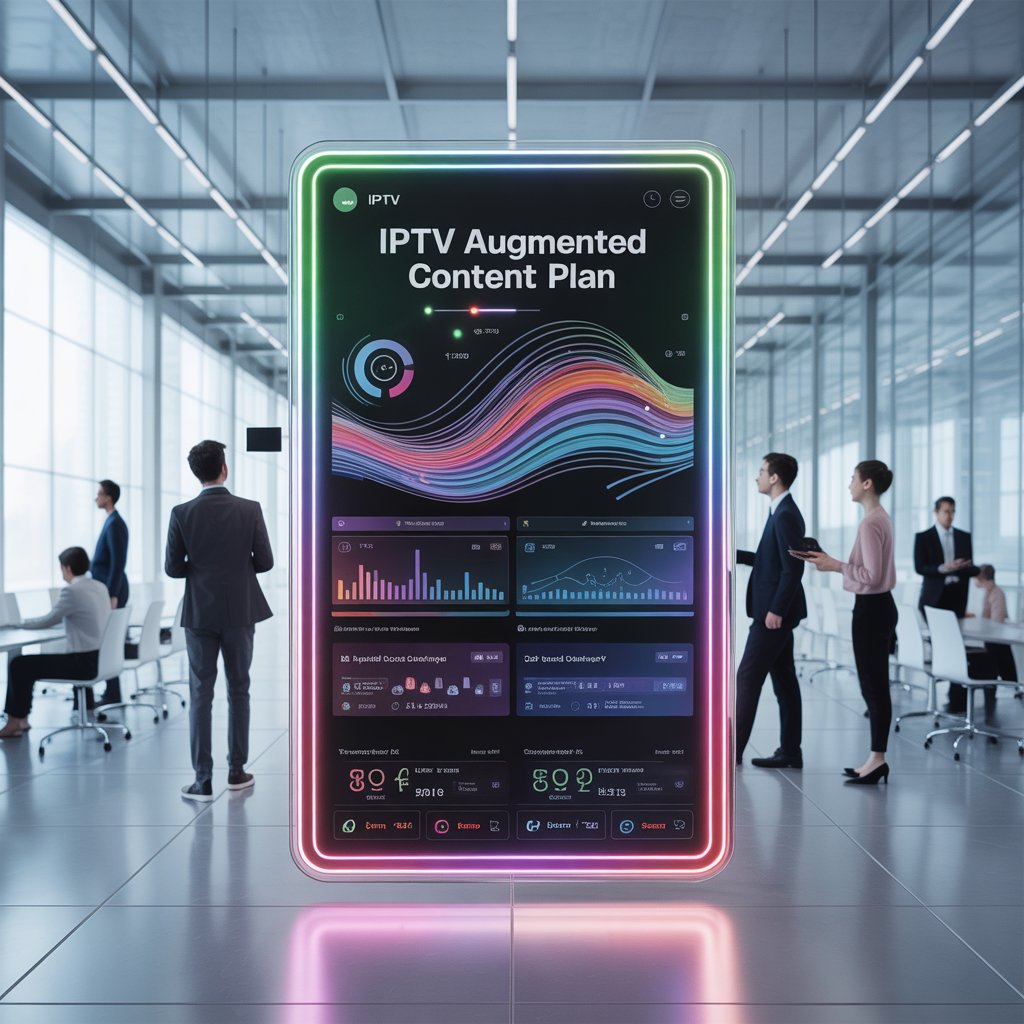
Future Forward: Your Ultimate 2025 IPTV Augmented Content Plan for Immersive Entertainment
In 2025, the way we consume television is rapidly evolving beyond passive viewing. Internet Protocol Television (IPTV) has already transformed content delivery, offering unparalleled flexibility and personalization. But the next frontier isn’t just about *what* you watch, but *how* you interact with it, how it blends with your reality, and how it responds to your preferences. This is the promise of an IPTV augmented content plan, a strategic approach to integrating interactive and immersive elements directly into your streaming experience.
Augmented content, leveraging technologies like Augmented Reality (AR) and Artificial Intelligence (AI), is set to redefine entertainment, education, and even commerce within the IPTV ecosystem. For viewers, content creators, and advertisers across the United States, understanding and implementing an effective IPTV augmented content plan is crucial for staying ahead in a competitive and rapidly innovating digital landscape. It’s about turning viewers into participants, and screens into portals to richer, more dynamic worlds.
This comprehensive guide will delve deep into the fascinating world of augmented content within IPTV. We’ll explore what it is, why it’s becoming essential, the key components of a successful IPTV augmented content plan, and the exciting types of experiences it enables. We’ll also discuss the technical considerations, ethical implications, and the future outlook for this transformative technology. Get ready to discover how augmented content is making your TV smarter, more engaging, and incredibly immersive.
Table of Contents
- What is IPTV Augmented Content?
- Why an IPTV Augmented Content Plan Matters in 2025
- Key Components of an Effective IPTV Augmented Content Plan
- Types of IPTV Augmented Content Experiences
- Benefits for Content Providers & Advertisers
- Benefits for Viewers: A New Era of Engagement
- Technical Considerations for Implementing Augmented IPTV
- Challenges and Ethical Considerations
- Developing Your IPTV Augmented Content Plan: A Strategic Approach
- The Future of IPTV Augmented Content
- Conclusion: Embrace the Augmented Reality of Television
What is IPTV Augmented Content?
To understand an IPTV augmented content plan, let’s first define “augmented content” in the context of IPTV. IPTV (Internet Protocol Television) delivers content over the internet, offering features like Video-on-Demand (VOD), live TV, and interactive services. Augmented content refers to the integration of digital information, interactive elements, or virtual objects into a real-world video stream, enhancing the viewer’s perception of the content. It’s about adding layers of data and interactivity on top of the traditional video feed.
This goes beyond simple pop-up ads. It involves using technologies like Augmented Reality (AR), Artificial Intelligence (AI), and real-time data processing to create a richer, more personalized, and often interactive experience. The goal is to make content more engaging, informative, and tailored to the individual viewer. For a basic understanding of IPTV, see our What is IPTV? guide.
Why an IPTV Augmented Content Plan Matters in 2025
The media landscape in 2025 is defined by fierce competition for viewer attention. Simply delivering content is no longer enough. This is why a strategic IPTV augmented content plan is becoming critical for content providers and advertisers in the USA.
1. Rising Viewer Expectations for Interactivity
Modern audiences, especially younger generations, are accustomed to interactive experiences from gaming and social media. They expect more than passive viewing. Augmented content fulfills this desire by turning TV into an active, engaging platform. This demand is a key driver for an effective IPTV augmented content plan.
2. Differentiated User Experience
In a crowded streaming market, offering unique, immersive experiences is a powerful differentiator. Augmented content can make a service stand out, attracting and retaining subscribers by providing something truly novel and engaging. This competitive edge is a significant reason to invest in an IPTV augmented content plan.
3. New Monetization Opportunities
Augmented content opens up innovative advertising models beyond traditional commercials. Think interactive shoppable ads, virtual product placements, and sponsored content overlays that are less intrusive and more effective. This creates new revenue streams, making an IPTV augmented content plan attractive to businesses. Explore the future of advertising in streaming.
4. Deeper Data Insights
Interactions with augmented content generate rich data on viewer preferences, engagement patterns, and even emotional responses. This data can be invaluable for content optimization, personalization, and targeted advertising. This data-driven approach is a core benefit of an IPTV augmented content plan. Learn about IPTV AI analytics 2025.
5. Enhanced Educational and Informational Value
Augmented content can make educational programs, news, and documentaries more informative and engaging by layering real-time data, historical context, or interactive quizzes directly onto the video. This transforms learning into an immersive experience.
Key Components of an Effective IPTV Augmented Content Plan
Building a successful IPTV augmented content plan requires a strategic combination of technology, content, and user experience design:
1. Robust Data Integration and Analytics
The foundation of augmented content is data. This includes viewer profiles, real-time viewing behavior, network conditions, and content metadata. An effective plan needs:
- Real-time Data Processing: To analyze user interactions and dynamically deliver relevant augmented elements.
- AI/ML Models: For personalization, content recommendation, and predicting optimal moments for augmented overlays.
- Secure Data Pipelines: To ensure privacy and compliance with regulations like CCPA.
2. Advanced AR/VR and Rendering Technologies
To deliver immersive augmented experiences, providers need:
- High-Performance Rendering Engines: To seamlessly overlay 3D objects or interactive graphics onto video streams without latency.
- Device Compatibility: Ensuring augmented content works across various devices, from smart TVs with AR capabilities to mobile devices and dedicated VR headsets.
- Cloud-Based Processing: To handle the intensive computational demands of real-time AR/VR rendering and data analysis.
3. Specialized Content Creation and Curation
Creating augmented content requires new skills and workflows:
- Interactive Storytelling: Developing narratives that incorporate viewer choice and real-time data.
- 3D Asset Creation: Designing virtual objects, characters, and environments that can be overlaid onto video.
- Metadata Enrichment: Tagging content with detailed information that AI can use to trigger relevant augmented elements.
4. Intuitive User Experience (UX) Design
Augmented content should enhance, not detract from, the viewing experience:
- Seamless Integration: Augmented elements should feel natural and not jarring.
- Clear Calls to Action: If interactive, users should easily understand how to engage.
- Non-Intrusive Design: Overlays should be subtle and only appear when relevant, avoiding clutter.
Types of IPTV Augmented Content Experiences
An effective IPTV augmented content plan can manifest in various exciting ways, transforming how viewers in the USA interact with their screens:
1. Interactive Overlays and “Clickable” Content
What it is: Digital layers that appear on screen, allowing viewers to click for more information, participate in polls, or even make purchases. Examples: During a cooking show, click on an ingredient to see the recipe. During a sports game, click on a player to see their real-time stats. During a fashion show, click on an outfit to buy it. Impact: Turns passive viewing into active engagement, offering immediate gratification and direct conversion paths. This is a foundational element of many IPTV augmented content plan strategies.
2. Virtual Product Placement and Dynamic Advertising
What it is: Digital products or brands are seamlessly inserted into content, or ads dynamically change based on viewer profile. Examples: A character in a show sips from a coffee cup with a dynamically inserted brand logo. During a live sports broadcast, a virtual billboard appears on the field with an ad targeted to your demographic. Impact: Less intrusive advertising, higher relevance, and new monetization opportunities for content creators. This is a powerful aspect of an IPTV augmented content plan.
3. Gamification and Interactive Narratives
What it is: Integrating game-like elements or branching storylines where viewer choices influence the narrative. Examples: During a mystery show, viewers can vote on who they think the culprit is, with the show reacting to the popular vote. During a reality show, viewers can vote for their favorite contestant in real-time. Impact: Deepens viewer immersion and creates a sense of co-creation, making content highly addictive. This is a cutting-edge component of an IPTV augmented content plan.
4. Real-time Data Visualizations and Infographics
What it is: Live, interactive data overlays on news, sports, or educational content. Examples: During an election broadcast, an interactive electoral map appears, allowing viewers to drill down into county-level results. During a financial news segment, stock market data is overlaid on the screen with interactive charts. Impact: Makes complex information more digestible and engaging, empowering viewers with instant, deeper understanding. This is vital for informative IPTV augmented content plan applications.
5. Immersive Environments and AR Portals
What it is: Using AR to blend digital elements with the viewer’s physical environment, or creating virtual portals to other worlds. Examples: A news report on climate change shows a virtual polar bear appearing in your living room. During a travel show, a “portal” appears on your TV screen, allowing you to virtually step into the destination with a compatible AR device. Impact: Blurs the line between content and reality, creating truly unforgettable and highly engaging experiences. This is the most futuristic element of an IPTV augmented content plan. See our IPTV Virtual Reality Comparison.
Benefits for Content Providers & Advertisers
For businesses in the United States, a well-executed IPTV augmented content plan offers significant strategic advantages:
- Increased Viewer Engagement & Retention: Interactive and personalized experiences keep viewers hooked for longer, reducing churn.
- New Monetization Avenues: Beyond traditional subscriptions and ads, augmented content opens doors for interactive commerce, sponsored experiences, and premium content tiers.
- Richer Data Collection: Every interaction with augmented content provides valuable data on viewer preferences, informing content strategy and ad targeting.
- Competitive Differentiation: Offering unique, cutting-edge augmented experiences helps providers stand out in a crowded streaming market.
- Enhanced Brand Recall & Conversion: More engaging and relevant ads lead to higher brand recall and direct conversion opportunities.
- Future-Proofing Content Strategy: Investing in augmented content prepares providers for the next generation of media consumption.
These benefits collectively drive innovation and profitability within the IPTV ecosystem, making an IPTV augmented content plan a smart business move.
Benefits for Viewers: A New Era of Engagement
While providers gain business advantages, viewers in the USA are the ultimate beneficiaries of a robust IPTV augmented content plan:
- Deeper Immersion: Content becomes more captivating when you can interact with it or see it blend with your environment.
- Personalized Experiences: Get content and ads that are truly relevant to your interests, making your viewing time more valuable.
- Active Participation: Move beyond passive watching to actively engage with stories, learn new facts, or influence narratives.
- Enhanced Learning: Educational content becomes more effective and memorable with interactive data and virtual overlays.
- Convenient Commerce: Discover and purchase products directly from your screen, eliminating friction in the shopping process.
- Discover New Content: Augmented elements can guide you to related shows, movies, or information you might not have found otherwise.
Ultimately, an IPTV augmented content plan promises a more dynamic, informative, and entertaining viewing experience for every user.
Technical Considerations for Implementing Augmented IPTV
Developing and deploying an IPTV augmented content plan is technically complex, requiring significant infrastructure and expertise:
1. High-Bandwidth Network Infrastructure
Augmented content, especially AR/VR overlays and real-time interactive elements, demands substantial bandwidth and extremely low latency. Fiber-optic networks and advanced content delivery networks (CDNs) are essential. This is crucial for seamless delivery of any IPTV augmented content plan. Check your local broadband speeds on sites like BroadbandNow.
2. Edge Computing and Cloud Processing
To minimize latency and enable real-time interactions, much of the data processing and rendering for augmented content will need to occur closer to the user, at the “edge” of the network, rather than solely in centralized cloud data centers. This distributed computing model is vital for a responsive IPTV augmented content plan.
3. AI and Machine Learning Frameworks
Sophisticated AI models are needed for:
- Computer Vision: To recognize objects, faces, and scenes in video for contextual augmentation.
- Natural Language Processing (NLP): For voice commands and understanding user intent in interactive scenarios.
- Recommendation Engines: For personalizing augmented content delivery.
4. Device Hardware Compatibility
Not all existing smart TVs or streaming devices have the processing power or sensors (e.g., cameras, depth sensors) required for advanced AR experiences. A successful IPTV augmented content plan must consider the installed base of compatible devices and plan for future hardware adoption.
5. Interoperability and Standards
Ensuring augmented content works seamlessly across different IPTV platforms, operating systems, and devices requires adherence to industry standards and robust APIs. This is a significant challenge but essential for widespread adoption.
6. Scalable Content Management Systems (CMS)
Managing the vast amount of augmented content assets (3D models, interactive scripts, data feeds) requires highly scalable and flexible CMS solutions. This ensures content can be updated and delivered efficiently.
Challenges and Ethical Considerations
Implementing an IPTV augmented content plan, while exciting, comes with significant challenges and ethical responsibilities:
1. Data Privacy and Security
Challenge: Augmented content often relies on collecting highly personal data (e.g., facial expressions for emotion detection, real-time environment scans). This raises major privacy concerns. Solution: Strict adherence to privacy regulations (e.g., CCPA, and emerging federal laws in the USA), robust encryption, anonymization, and transparent consent mechanisms are paramount. Users must have clear control over their data. This is a critical ethical consideration for any IPTV augmented content plan. Learn about data privacy in streaming.
2. Content Quality and Over-Augmentation
Challenge: Poorly designed or excessively augmented content can be distracting, jarring, or even nauseating for viewers. Solution: Prioritize quality over quantity. Conduct extensive user testing. Ensure augmented elements genuinely enhance the experience rather than detract from it. Less can often be more.
3. Digital Divide and Accessibility
Challenge: Advanced augmented content may require high-end devices and ultra-fast internet, potentially excluding users in underserved areas or those with older hardware. Solution: Develop tiered experiences (e.g., basic overlays for older devices, full AR for newer ones). Advocate for broader broadband access. Ensure accessibility features are integrated into augmented experiences. This relates to efforts to bridge the digital divide.
4. Algorithmic Bias and Manipulation
Challenge: AI-driven personalization and content augmentation can inadvertently perpetuate biases or be used to manipulate viewer perceptions (e.g., through targeted political messaging). Solution: Regular auditing of AI algorithms, diverse training datasets, and ethical AI development guidelines are crucial. Transparency about how algorithms influence content is also important.
5. Monetization vs. User Experience
Challenge: Balancing the desire for new revenue streams (e.g., interactive ads) with maintaining a non-intrusive, enjoyable user experience. Solution: Focus on value-added advertising that is relevant and optional. Avoid excessive or forced interactions. User trust is paramount for long-term success of an IPTV augmented content plan.
Developing Your IPTV Augmented Content Plan: A Strategic Approach
For content creators, broadcasters, and platform owners in the USA looking to implement an IPTV augmented content plan, here’s a strategic roadmap:
- Define Clear Objectives: What do you want to achieve? (e.g., increase engagement, drive commerce, enhance education, differentiate service).
- Audience Analysis: Understand your target audience’s tech readiness, preferences, and pain points. What types of augmented experiences would they value most?
- Content Audit & Opportunity Mapping: Identify existing content that could benefit from augmentation. Where are the natural integration points for interactive elements or AR overlays?
- Technology Assessment: Evaluate your current infrastructure and identify necessary upgrades (bandwidth, servers, AI tools, device compatibility). Consider partnerships with AR/VR tech companies.
- Pilot Programs & User Testing: Start small with pilot projects. Conduct extensive user testing to gather feedback and iterate on designs before a full rollout.
- Monetization Strategy: Develop clear models for how augmented content will generate revenue (e.g., premium access, interactive ads, virtual goods).
- Ethical Guidelines & Transparency: Establish clear policies for data usage, consent, and content disclosure. Be transparent with users about how augmented content works.
- Marketing & Education: Educate your audience on the benefits of augmented content and how to access/interact with it.
- Iterate and Scale: The augmented content landscape will evolve rapidly. Be prepared to continuously innovate, update, and scale your offerings based on data and user feedback.
The Future of IPTV Augmented Content
The evolution of IPTV augmented content plan is just beginning. Beyond 2025, we can anticipate even more transformative developments:
- Seamless Blending of Real and Virtual: Advanced AR will allow digital content to interact with your physical environment in highly realistic ways, making your TV a window to truly blended realities.
- AI-Generated Interactive Narratives: Generative AI will create dynamic, personalized storylines that adapt in real-time based on viewer input, biometric data, or even external events.
- Multi-Sensory Experiences: Integration with haptic feedback devices, smart lighting, and even scent diffusers to create truly immersive, multi-sensory augmented content experiences.
- Decentralized Content Creation & Ownership: Blockchain technology could empower independent creators to develop and monetize augmented content directly, fostering a more diverse and vibrant ecosystem. This ties into concepts in IPTV Crypto Rewards 2025.
- Personalized Learning & Skill Development: Augmented content will offer highly interactive educational modules, allowing users to practice skills (e.g., virtual surgery, language learning) directly through their TV.
- Social Augmented Viewing: Shared augmented experiences where friends can watch content together, interact with virtual objects, and see each other’s reactions overlaid onto the screen, even if physically apart.
These advancements promise to make IPTV augmented content plan an even more integral and sophisticated part of our daily lives, transforming entertainment into an active, personalized, and truly immersive journey.
Conclusion: Embrace the Augmented Reality of Television
In 2025, an effective IPTV augmented content plan is no longer a futuristic concept; it’s a strategic imperative for anyone looking to lead in the digital entertainment space. For viewers in the United States, it promises a revolutionary shift from passive consumption to active, personalized, and deeply immersive experiences.
By understanding the types of augmented content, their benefits, and the technical and ethical considerations, content providers can craft compelling strategies that captivate audiences and unlock new monetization opportunities. Embrace this exciting evolution, as augmented content transforms your TV into a dynamic portal to endless possibilities.
What Augmented Content Experience Do You Dream Of?
Are you excited about the potential of an IPTV augmented content plan? What kind of interactive or immersive experiences would you love to see on your TV?
Share your ideas and questions in the comments below! Let’s discuss how augmented content will shape the future of entertainment.
SEO-friendly URL slug suggestion: /iptv-augmented-content-plan-guide