The Ultimate IPTV Mental Health Content Comparison (2025 Guide)
In an era where mental wellness is finally taking center stage in the national conversation, people are increasingly looking for supportive and destigmatizing content[57]. This has led many in the United States to wonder how their media consumption can support their mental health journey. While streaming giants have their own libraries, a new question has emerged: What does an IPTV mental health content comparison reveal about the thousands of channels available through this flexible technology?
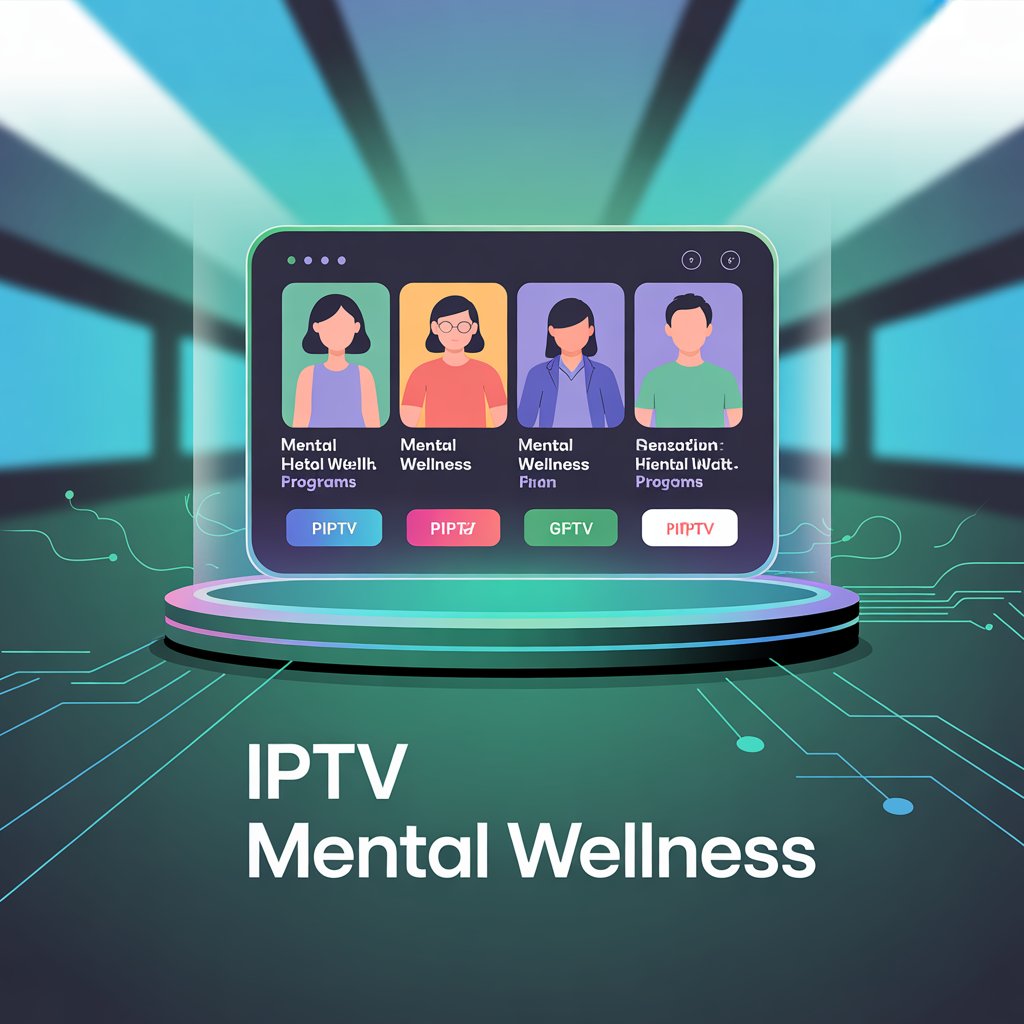
If you’re looking for ways to leverage your entertainment system for mental wellness, you’ve come to the right place. This guide provides a comprehensive IPTV mental health content comparison for 2025. We will explore how to find valuable documentaries, talk shows, and wellness programming on IPTV services, compare it to traditional streaming platforms, and offer a clear strategy for curating a more mindful viewing experience.
The truth is, while dedicated “mental health channels” are rare, IPTV’s vast and diverse ecosystem offers a wealth of supportive content if you know where and how to look. This article will be your guide, providing a detailed IPTV mental health content comparison to help you navigate this new landscape.
Table of Contents
IPTV’s Role in a Mindful Media Diet
Unlike mainstream streaming services that operate as walled gardens of content, IPTV (Internet Protocol Television) services primarily function as aggregators. They provide access to thousands of live, linear television channels from around the world, alongside massive Video-on-Demand (VOD) libraries[10]. This means a direct IPTV mental health content comparison is less about what a single provider creates and more about what channels and on-demand files they give you access to.
The key advantage of IPTV is its breadth. A single subscription can unlock public broadcasting from different states, international news outlets, and niche documentary channels that might not be available in a standard cable package. This variety is the foundation for building a media library that supports mental well-being. A proper IPTV mental health content comparison must take this diversity into account.
Where to Find Mental Health Content: A Category Breakdown
Finding supportive programming requires a strategic approach. Instead of searching for a single “mental health channel,” the key is to know which categories of content are most likely to feature these topics. Here’s where to focus your search for any IPTV mental health content comparison.
1. Public Broadcasting (PBS)
Public media is a goldmine for high-quality, empathetic, and well-researched mental health programming. PBS has produced some of the most impactful documentaries on the subject. When choosing an IPTV service, check if it includes a wide range of local PBS affiliates from across the US. This is a crucial element in any IPTV mental health content comparison.
- Key Content to Look For: Documentaries like “Hiding in Plain Sight: Youth Mental Illness” and “Mysteries of Mental Illness” are prime examples[75][77]. These series offer deep, compassionate explorations of complex issues. You can find more information on their programming at the official PBS website.
2. Documentary Channels
Many channels dedicated to non-fiction programming regularly feature stories about mental health, psychology, and human behavior. An effective IPTV mental health content comparison should always evaluate the availability of these channels. Look for providers that carry channels like The Documentary Channel, VICE, and others known for insightful, human-centered stories.
3. On-Demand (VOD) Libraries
This is arguably the most powerful feature of modern IPTV services. Most providers include VOD libraries with tens of thousands of movies and TV series. The key is to use the search function effectively. This is where a good IPTV mental health content comparison becomes essential.
- How to Search: Use keywords like “mental health,” “anxiety,” “depression,” “psychology,” or the titles of specific well-known documentaries[99]. You may find entire seasons of talk shows or documentary series that are not available on mainstream platforms.
4. Specialty and Health-Focused Channels
While still emerging, some services are dedicated entirely to health and wellness. One innovative example is **Doctors Explain TV**, a multilingual health education network that partners with IPTV services to deliver its content[41]. It includes 24/7 broadcasts on mental health, community-centered documentaries, and even virtual consultations. The inclusion of such channels is a significant plus in any IPTV mental health content comparison.
5. News and Talk Show Segments
Major news networks and daytime talk shows are increasingly dedicating segments to mental health awareness. While not a primary source, having access to a wide variety of national and international news channels can keep you informed on the latest developments and public conversations around mental wellness. A thorough IPTV mental health content comparison should consider this as well.
IPTV vs. On-Demand Streaming Services: A Comparison
How does finding mental health content on IPTV compare to using a service like Netflix, Hulu, or Max? Each has distinct advantages, and a thoughtful IPTV mental health content comparison highlights these differences.
A direct IPTV mental health content comparison shows that IPTV offers a broader, more diverse, and “live” discovery experience, while on-demand platforms provide curated, high-production-value original content.
IPTV: The Broad Aggregator
- Pros: Access to thousands of live channels, including public broadcasting and niche international content. Huge VOD libraries often contain older or hard-to-find documentaries. The “channel surfing” experience can lead to accidental discovery.
- Cons: Content quality can vary wildly. Finding specific topics requires active searching. You are subject to the broadcast schedules of linear channels. This is an important factor in any IPTV mental health content comparison.
On-Demand Services (Netflix, Max, etc.)
- Pros: High-production-value original documentaries and series (e.g., “The Me You Can’t See” on Apple TV+)[99]. User-friendly interfaces with strong recommendation algorithms. Content is available to watch anytime.
- Cons: Limited libraries compared to the entire universe of broadcast television. Content can be removed from the platform. You are confined to what the service chooses to license or produce.
How to Choose an IPTV Provider for Wellness Content
When your goal is to find supportive programming, your criteria for choosing an IPTV service shift. Here’s what to prioritize to make an informed IPTV mental health content comparison.
- Check the Channel List for Key Networks: Before subscribing, ask for a channel list and specifically look for multiple PBS affiliates, documentary channels, and any known wellness channels. A good IPTV mental health content comparison starts here.
- Inquire About VOD Library Size and Searchability: A large VOD library is only useful if its search function is effective. Ask if you can search by genre, actor, and keyword. A trial period is invaluable for testing this feature.
- Look for a User-Friendly Electronic Program Guide (EPG): A good EPG will allow you to search the upcoming schedule across all channels for keywords related to mental health, helping you discover relevant programs in advance.
- Read User Reviews: Look for feedback on forums like Reddit that discusses the quality and organization of the VOD library and the stability of niche channels[12]. User reviews are a vital part of any IPTV mental health content comparison.
A Note on Mindful Viewing and Binge-Watching
It’s important to approach media consumption with intention. Research has shown a correlation between binge-watching and adverse mental health outcomes like stress, anxiety, and depression[56][59]. While television can be a source of comfort and education, it’s crucial to be mindful of viewing habits.
Use the features of your IPTV service to your advantage. Set reminders, use the EPG to plan your viewing instead of passively watching, and balance entertainment with other wellness activities. The goal of this IPTV mental health content comparison is to empower you to be a more conscious viewer, not just a consumer. An effective IPTV mental health content comparison should lead to healthier viewing habits.
Frequently Asked Questions (FAQ)
Are there dedicated 24/7 mental health channels on IPTV?
Generally, no. Most IPTV providers do not offer a channel exclusively dedicated to mental health in their standard lineup. However, specialized services like Doctors Explain TV are emerging that use IPTV technology to deliver this type of content[41]. The strength of IPTV, as shown in this IPTV mental health content comparison, lies in its access to channels that *feature* this content, rather than a single dedicated source.
How can I find supportive content in a huge VOD library?
Use specific and broad search terms. Start with “mental health,” “anxiety,” and “documentary.” Then, search for the names of well-known advocates or specific conditions. Exploring the “Documentary” and “Lifestyle” categories can also yield positive results. This is a key takeaway from our IPTV mental health content comparison.
Is it better to use IPTV or YouTube for mental health content?
They serve different purposes. YouTube offers a vast library of user-generated content from creators and licensed therapists like Kati Morton, but quality can be inconsistent[47][35]. IPTV provides access to professionally produced, long-form broadcast documentaries and series. A comprehensive IPTV mental health content comparison suggests that a balanced approach using both platforms is most effective.
Conclusion: Curating Your Own Mental Wellness Channel
After a thorough IPTV mental health content comparison, the verdict is clear: while IPTV services don’t typically offer a pre-packaged “mental health” bundle, they provide all the necessary tools to create your own. The power of IPTV lies in its unparalleled access to a diverse range of broadcast and on-demand content.
By prioritizing providers with strong public broadcasting lineups, extensive VOD libraries, and a searchable EPG, you can transform your television from a passive escape into an active tool for learning and wellness. The key is to be an intentional viewer—to seek out the stories that uplift, educate, and destigmatize. This is the ultimate goal of a good IPTV mental health content comparison.
To learn more about getting started, you can explore our guide to choosing an IPTV provider or our tips on mastering your VOD library. For external resources, the Mental Health America website is an excellent source of information and support[60].
What kind of mental health content do you wish was more accessible on television? Share your thoughts and experiences in the comments below!
Back to Top