The Ultimate Guide to IPTV for Fiber Internet: Why Your Connection Matters (2025)
You’ve finally done it. You’ve ditched your old, unreliable cable internet and upgraded to the blazing-fast speeds of fiber. Pages load instantly, downloads finish in seconds, and your whole home feels connected like never before. Now, it’s time to ensure your entertainment experience is just as cutting-edge. If you’re tired of buffering live TV streams and pixelated video quality, then you need to know about the perfect pairing: IPTV for fiber internet.
IPTV, or Internet Protocol Television, offers a universe of content, from thousands of live channels to vast libraries of movies and shows. But this high-volume streaming is only as good as the connection that delivers it. While IPTV can work on slower connections, using IPTV for fiber internet unlocks its true potential, creating a seamless, high-quality, and buffer-free viewing experience that cable and DSL users can only dream of.
This in-depth guide will explain why fiber is the undisputed champion for streaming IPTV. We’ll break down the technical advantages, detail the speeds you actually need, and provide actionable tips to optimize your home network. By the end, you’ll understand how to leverage your new connection to build the ultimate setup for flawless IPTV for fiber internet.
What is Fiber Internet and Why is it a Game-Changer?
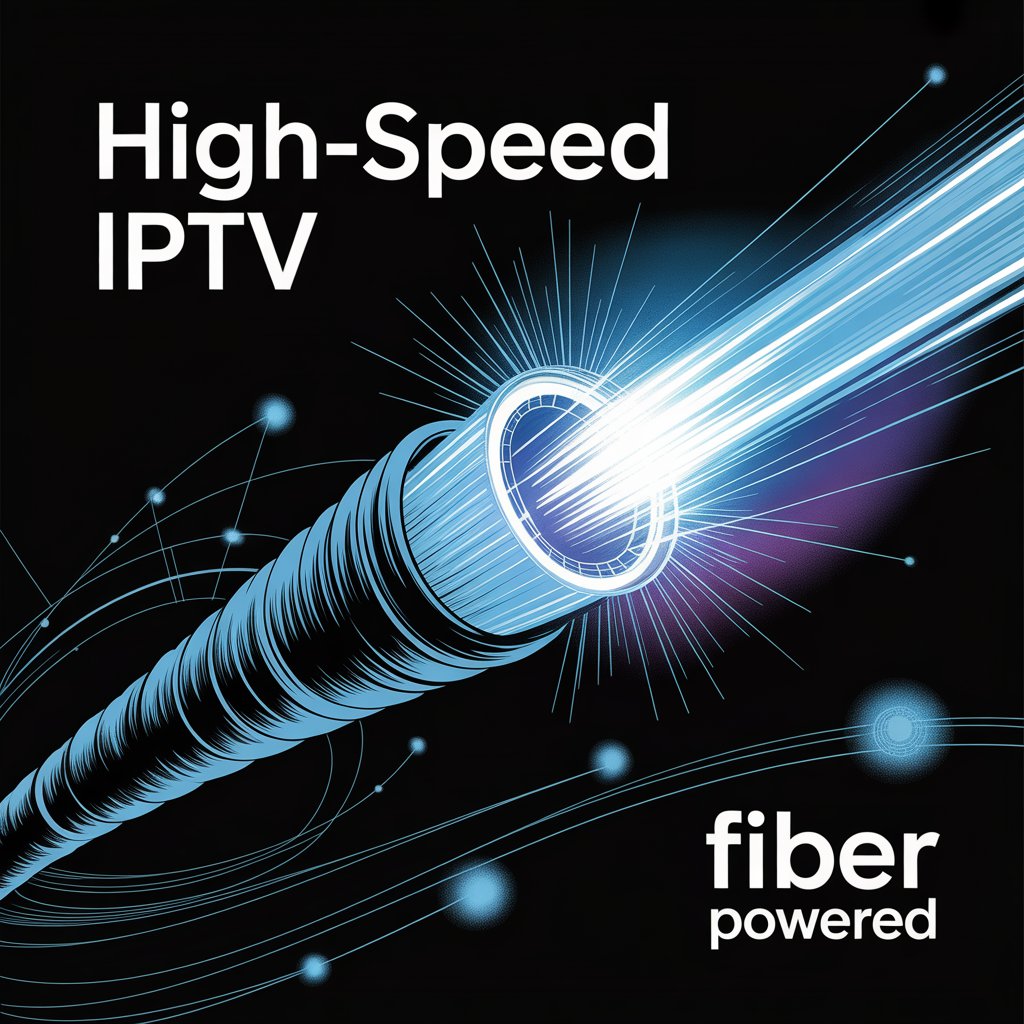
Before we dive into the “why,” it’s crucial to understand what makes fiber internet so special. Unlike traditional internet technologies that use copper wires (like cable and DSL), fiber-optic internet transmits data as pulses of light through incredibly thin strands of glass. This fundamental difference in technology gives it three massive advantages that are critical for a superior experience with IPTV for fiber internet.
- Symmetrical Speeds: This is perhaps the biggest differentiator. Cable internet is typically asymmetrical, meaning you have fast download speeds but very slow upload speeds. Fiber offers symmetrical speeds, so your upload speed is just as fast as your download speed. While IPTV is primarily a download activity, a robust upload speed contributes to overall network stability, especially in a home with multiple users.
- Higher Bandwidth: Think of bandwidth as the width of a highway. A fiber connection is like a massive, 16-lane superhighway, whereas a cable connection is more like a 4-lane road. Fiber can simply handle much more data traffic simultaneously without getting congested.
- Lower Latency: Latency (or “ping”) is the time it takes for a data packet to travel from your device to a server and back. Because fiber transmits data at the speed of light with less interference, it has significantly lower latency than cable or DSL.
As the Federal Communications Commission (FCC) notes, fiber is the gold standard for modern broadband. These three advantages are precisely why using IPTV for fiber internet is such a transformative and superior experience.
The Perfect Match: Why IPTV for Fiber Internet is the Ultimate Combo
IPTV works by delivering television content as a continuous stream of data packets. Any interruption or delay in this stream results in the dreaded buffering wheel or a drop in video quality. Here’s how the advantages of fiber directly address and eliminate these common IPTV pain points, making IPTV for fiber internet the ideal setup.
Unlocking Buffer-Free 4K Streaming
Streaming a 4K video requires a significant and, more importantly, a *consistent* amount of bandwidth. A 4K stream can consume anywhere from 25 to 50 Mbps. While a high-end cable connection might be able to handle this in perfect conditions, any network congestion in your neighborhood can cause the available speed to dip, leading to buffering. With a typical 1 Gbps (1,000 Mbps) fiber plan, a single 4K stream uses less than 5% of your available bandwidth. There is so much headroom that your connection can easily absorb any fluctuations, ensuring a perfectly smooth, buffer-free 4K stream. This makes high-quality IPTV for fiber internet a reality, not just a promise.
Flawless Live Sports with Lower Latency
For sports fans, latency is a huge deal. The high latency on cable or satellite streams is why you often get a notification on your phone about a touchdown several seconds before you see it on your screen. Because fiber has much lower latency, the stream is closer to true real-time. This reduces the annoying delay and makes your viewing experience feel more immediate and exciting. Combining low latency with massive bandwidth ensures that the fast-paced action of a football game or a hockey match is delivered without stutter or pixelation, which is a key benefit of using IPTV for fiber internet.
Supporting Your Entire Household Simultaneously
A 1 Gbps fiber connection isn’t just about speed for one device; it’s about capacity for all of them. With fiber, you can have a 4K IPTV stream running in the living room, someone else gaming online in another room (an activity that also benefits immensely from low latency and high upload speeds), a third person on a Zoom call for work, and multiple other devices streaming music or browsing the web—all without a single one of them impacting the others. The massive bandwidth of a fiber connection ensures your IPTV for fiber internet experience remains flawless, no matter what else is happening on your network.
Unmatched Reliability and Stability
Fiber-optic cables are more durable and less susceptible to environmental factors than copper coaxial cables. They aren’t affected by temperature changes, moisture, or radio frequency interference in the same way. This means a fiber connection is generally more stable and less prone to outages, providing a rock-solid foundation for your IPTV for fiber internet service.
How Much Speed Do You Actually Need for IPTV?
While a 1 Gbps fiber plan is ideal, you don’t necessarily need gigabit speeds for a good experience. Here are the general bandwidth recommendations *per stream*:
- Standard Definition (SD): 3-5 Mbps
- High Definition (HD / 1080p): 10-15 Mbps
- 4K Ultra HD (UHD): 25-50 Mbps
The key is to consider how many simultaneous streams your household might use. If you have three TVs and could potentially be watching three separate 4K streams at once, you’d need a minimum of 75-150 Mbps dedicated just to IPTV. This is where even a basic 300 Mbps fiber plan provides more than enough bandwidth for an excellent IPTV for fiber internet experience, while a cable plan might struggle under that load. With a fiber connection, speed becomes an afterthought, allowing you to focus on the quality of your IPTV for fiber internet provider instead.
Optimizing Your Home Network for IPTV on Fiber Internet
Having a fast fiber connection is only the first step. To get the absolute best performance, you need to ensure your home network isn’t a bottleneck. Here are the four key components to optimize for the perfect IPTV for fiber internet setup.
The Gold Standard: A Wired Ethernet Connection
This is the single most important optimization you can make. Wi-Fi, by its very nature, is susceptible to interference from other devices, walls, and even your microwave. A wired Ethernet connection from your router directly to your streaming device provides the fastest, most stable, and most reliable connection possible, which is the foundation of a perfect setup for IPTV for fiber internet.
Your Router: The Unsung Hero of Your Network
The router provided by your ISP is often a basic model designed to meet minimum requirements. Upgrading to a high-quality aftermarket router with modern technology like Wi-Fi 6 (or Wi-Fi 6E) can make a world of difference, especially for devices that can’t be wired. A good router can handle more devices, provide better coverage, and manage traffic more efficiently, which is crucial for a great IPTV for fiber internet experience.
The Power of Your Streaming Device
Your streaming device is the final piece of the puzzle. An older, underpowered device (like a first-generation Firestick) might have a slow processor or a weak Wi-Fi chip that can’t keep up, even with a gigabit connection. Investing in a powerful, modern device is essential for getting the most out of your IPTV for fiber internet setup. The top-tier options renowned for their performance are:
- Nvidia Shield TV Pro: Often considered the king of streaming devices due to its powerful processor and AI-upscaling capabilities.
- Apple TV 4K: Known for its incredibly smooth interface and powerful hardware.
- High-End Amazon Fire TV Devices (Cube, 4K Max): Offer excellent performance for their price.
You can learn more about picking the right hardware in our guide to the best 4K streaming devices.
Using a VPN with IPTV for Fiber Internet
Even with a lightning-fast fiber connection, a VPN is a critical tool. It encrypts your traffic, which prevents your ISP from seeing what you are streaming and potentially throttling your connection. Many people worry that a VPN will slow down their connection. While this is true to an extent, modern premium VPNs are highly optimized for speed. On a 1 Gbps fiber connection, the speed reduction from a top-tier VPN is often negligible and will still leave you with hundreds of Mbps—far more than you need for any stream when enjoying your IPTV for fiber internet. For recommendations, see our guide to the best VPNs.
Quick Answers to Your Top Fiber IPTV Questions
Is fiber internet good for IPTV?
Yes, fiber internet is the best possible connection for IPTV. Its high symmetrical speeds, massive bandwidth, and low latency all contribute to a superior, buffer-free streaming experience, especially for 4K content and live sports. It is the ideal foundation for IPTV.
How fast does my internet need to be for IPTV on fiber?
For a single 4K stream, you need at least 25-50 Mbps. However, even a basic 300 Mbps fiber plan provides more than enough speed for multiple 4K streams and other devices simultaneously. With a typical 1 Gbps IPTV for fiber internet setup, speed is no longer a concern.
Will IPTV slow down my fiber internet?
No. A single 4K stream on an IPTV for fiber internet setup uses a very small fraction (typically less than 5%) of a 1 Gbps fiber connection’s total bandwidth. It will have no noticeable impact on the performance of other devices on your network, such as computers or gaming consoles.
Conclusion: Achieving the Pinnacle of Streaming
Upgrading to fiber internet opens up a new world of possibilities for your home entertainment. When you pair this powerful connection with a high-quality IPTV service, you create the ultimate IPTV for fiber internet combination that simply can’t be beaten. The frustrating days of buffering, pixelation, and network slowdowns are replaced with the seamless, instant, and crystal-clear experience that modern streaming was always meant to be.
Remember, however, that the connection is only half the equation. By taking the time to optimize your home network with a wired connection, a powerful router, and a capable streaming device, you ensure that you are getting every bit of performance you’re paying for. This is how you truly unlock the full potential of IPTV for fiber internet and achieve the pinnacle of the modern streaming experience. For help finding a quality service, start with our comprehensive guide to choosing an IPTV provider.
What’s your experience been streaming IPTV on fiber? Have you noticed a big difference compared to cable? Share your tips and speeds in the comments below!
Return to top of page